

Beyond the Comfort Zone: Why Real-World Experience Matters More Than Ever for Young People
By Clea Nuss-Troles
The Comfort Trap of Modern Upbringing
Today’s generation of young people is growing up in a world that is, in many ways, more secure, structured, and interconnected than ever before. Education systems are carefully designed, digital tools provide instant access to information, and daily life is often organized with a level of predictability that previous generations did not experience. On the surface, this appears to be an ideal environment for development. Stability offers safety, structure provides guidance, and access to knowledge opens doors. Yet beneath this well-organized framework lies a subtle but significant challenge. Many young people are highly informed — but less experienced. They understand the world through screens, systems, and curated environments, but have fewer opportunities to navigate it independently. The unknown has been minimized, uncertainty has been reduced, and while this creates comfort, it also limits exposure to the very situations that foster real growth. This gap between knowledge and experience is becoming increasingly relevant, because the world young people are stepping into is not predictable. It is complex, fast-changing, and often ambiguous, and success within it will depend not only on what they know, but on how they respond when they don’t.
Growth Begins Where Comfort Ends
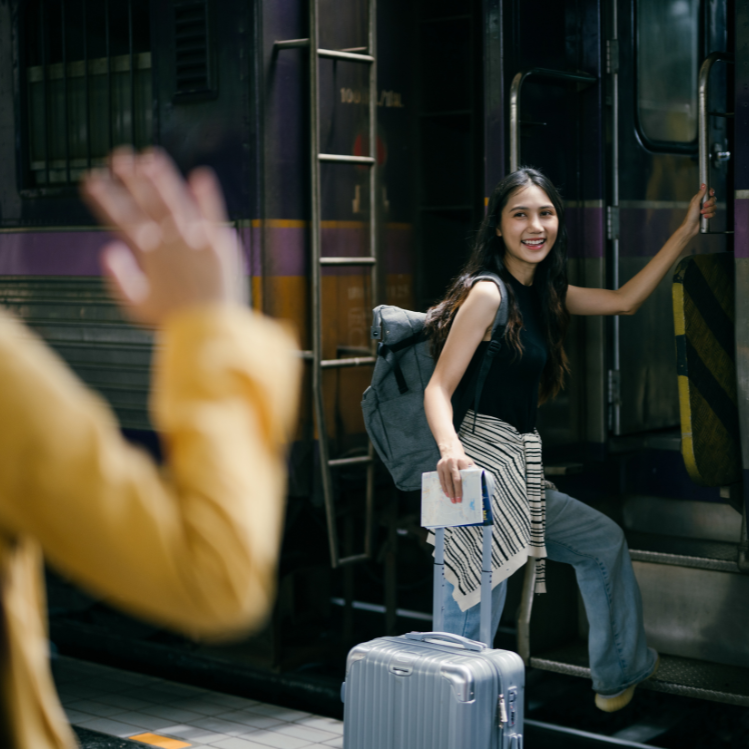
There is a simple truth that applies across all stages of life: growth does not happen in comfort — it happens at the edge of it. It is in moments of uncertainty, when we are required to make decisions, take responsibility, and engage with unfamiliar environments, that development accelerates. For young people, these moments are particularly transformative, representing the shift from dependence to independence, from observation to participation. Experiences such as traveling abroad, joining international programs, or stepping into a new cultural context create precisely these conditions. Suddenly, familiar patterns no longer apply, communication requires effort, navigation demands attention, and even small everyday situations become opportunities to learn. In these environments, young people expand in tangible ways. They communicate beyond their usual social circles, navigate unfamiliar systems, build resilience through small challenges, and experience what it means to rely on themselves. These are not abstract lessons; they are lived experiences, and it is through these experiences that identity begins to take shape in a deeper, more authentic way.
Skills That Can’t Be Taught in a Classroom
Traditional education plays an essential role in providing academic knowledge and intellectual structure, equipping young people with foundational skills for future pathways. However, many of the qualities that define success in real life are not developed through instruction alone. Confidence is rarely taught — it is built through action. Adaptability emerges when plans change and new solutions must be found. Emotional intelligence develops through real interactions, misunderstandings, and the process of learning to relate to others. In previous generations, these skills often evolved naturally through less structured environments and greater exposure to real-world situations. Today, these experiences are less automatic and must be created intentionally. Immersive opportunities such as living abroad, engaging with different cultures, or participating in experiential learning programs provide exactly this space. They allow young people to step outside controlled environments and into situations where growth is not prescribed, but discovered. It is here that they begin to understand not only how the world works, but how they themselves function within it.
The Role of Guidance and Trust
Stepping beyond the comfort zone does not mean stepping into uncertainty without support. In fact, the most meaningful growth occurs when independence is balanced with a sense of safety and guidance. For young people to fully benefit from new experiences, they need to feel supported while still being given space to explore. This balance is delicate but essential. Parents, educators, and program providers play a crucial role in creating environments where young people can take risks without feeling overwhelmed. When guidance is present but not restrictive, confidence grows naturally, and when trust is given, responsibility is embraced. It is within this framework that young people are most willing to engage with the unfamiliar, try new things, and push their boundaries. And it is precisely in these moments, when support and freedom coexist, that the deepest transformation takes place.
Rethinking Education for the Next Generation
As the world continues to evolve, so too must our understanding of what education truly means. Academic achievement alone is no longer sufficient preparation for the realities of modern life. Young people need opportunities to experience the world directly, to encounter different cultures, navigate unfamiliar situations, and develop confidence through action. They must learn not only how to succeed within structured systems, but how to adapt when those systems no longer apply. This requires a broader, more integrated approach to education — one that values experience alongside knowledge and personal growth alongside academic performance. Ultimately, the question is not only what young people know, but who they become when they step beyond what they know. And in a world that is constantly changing, that ability to adapt, engage, and grow through experience may be the most important education of all.