
Off Script, On Impact: Roksana Zaya’s Revolutionary Approach to Speaking
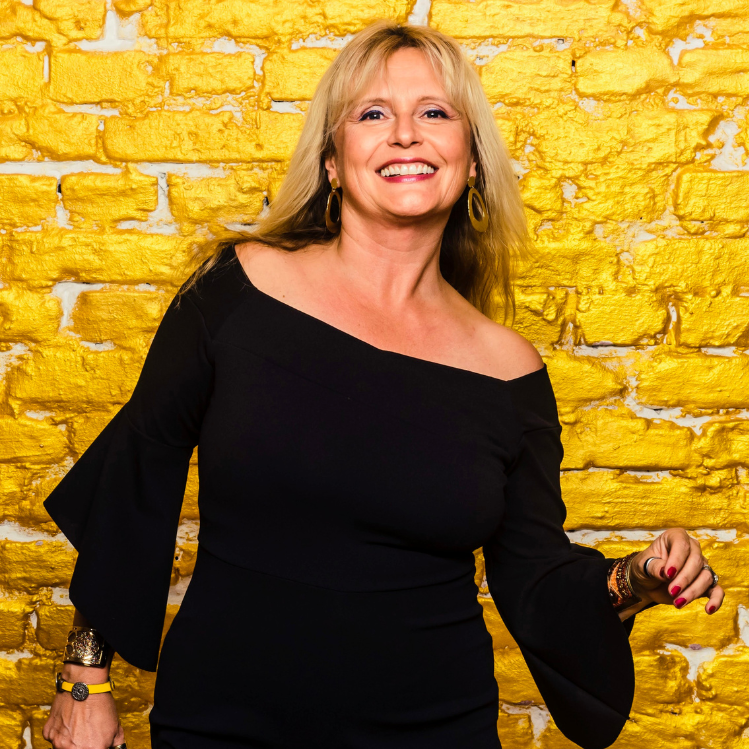
Roksana Zaya has spent over 30 years transforming the way people speak, perform, and connect. From learning to read people as a young immigrant to developing her signature SPEAK Method™, she helps speakers go beyond memorized words to create experiences that move, inspire, and convert. In a world full of noise and short attention spans, Roksana shows that real influence isn’t about what you say—it’s about how you make people feel.
“Speaking isn’t about words—it’s about the experience you create.”
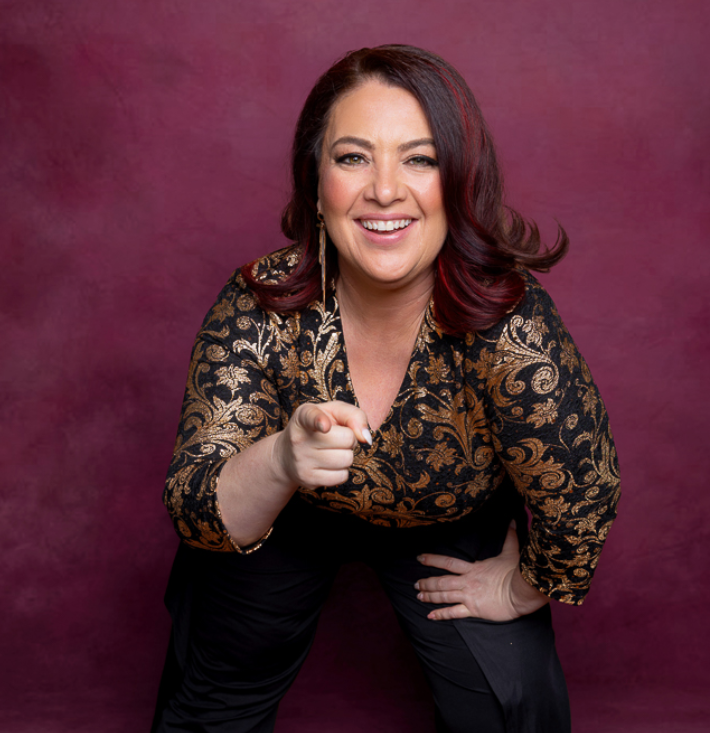
You’ve been in the world of speaking and performance for 30 years — what first drew you to this field?
Speaking wasn’t something I chose — it was something I had to learn early.
I immigrated to the U.S. and didn’t fully understand the language, so I learned how to read people before I could understand their words.
Tone. Body language. Energy. That’s how I made sense of everything and that awareness never left me.
As I got older, I studied behavior and communication more formally, but what stood out to me wasn’t just what people were saying. It was how people were responding.
What I started to see is that most speakers are taught to focus on the words, what to say, how to structure it, and how to sound “right.” But that’s not what drives impact.
What actually matters is the experience you create in the room. That gap between what’s said and the response it creates in the room determines the entire outcome of the talk.
That’s what drew me into this work.
The SPEAK Method™ is your signature framework. What inspired you to create it, and how does it transform the way people communicate?
I started out doing exactly what most speakers are taught to do — memorizing every word, rehearsing it to perfection, and trying not to mess it up. And I got really good at it.
I spent years in speech and performance, and even trained actors to follow scripts in a way that sounded natural and believable.
But I started to notice something. Even at that level, I was still nervous, still stressed, and not fully present. I’d be going over my words in my head, trying to remember what to say next, hoping I didn’t forget something important. I wasn’t actually enjoying it. I was just trying to get it right.
And the more I paid attention, the more I realized it wasn’t just me. This is how most speakers are trained.
When you rely on memorization, your focus shifts from connecting with people to trying to remember what comes next. The moment something changes, your confidence drops and you’re stuck in your head instead of being present in the room.
So I started asking a different question. How do you keep structure without relying on a script? How do you stay clear, in control, and fully present at the same time?
That’s what became the SPEAK Method™.
It gives speakers a clear framework to follow without memorizing every word, so instead of worrying about what to say next, they can focus on how they’re showing up, how they’re connecting, and how they’re moving people.
Most people are trained to focus on what to say. The SPEAK Method™ shows you how to think and respond in real time, so instead of trying to remember your words, you create something people actually feel.
You often talk about helping people go “off script.” What does that mean in practice, and why is it so powerful?
Off script doesn’t mean unprepared. It means you’re not relying on memorization to get through your message.
Most speakers think going off script means they’ll lose control, forget what to say, or start rambling. But the opposite is true. When you’re locked into a script, you’re focused on remembering your words instead of being present with your audience.
Going off script means you know your structure so well that you’re free to think, respond, and adjust in real time. You’re listening, reading the room, and allowing the moment to shape how the message is delivered.
In practice, it looks like being able to pivot when something unexpected happens, expand on a point when the audience is engaged, or simplify something when you feel confusion in the room. You’re not stuck trying to get back to your next line. You’re in control of the moment.
That’s what makes it so powerful. The audience can feel the difference. It’s more natural, more dynamic, and more engaging because it’s happening with them, not at them.
When you’re off script, you’re not performing a speech. You’re creating an experience people actually feel.
Many people fear public speaking. From your experience, what’s the real root of that fear—and how can they move past it?
Most people say they’re afraid of public speaking, but I don’t see it that way. We’re not born afraid to speak. We’re trained out of it.
As kids, we communicate freely. We raise our hands, we speak up, we express ourselves without overthinking it. But over time, that starts to change.
You say something wrong in class and get corrected. You get laughed at. You’re told you’re too loud, too much, or to just sit down and be quiet.
And little by little, you start to associate speaking with getting it wrong.
So it’s not fear of speaking itself. It’s years of conditioning that make people second-guess themselves the moment all eyes are on them.
The way past it isn’t to “be more confident.” It’s to rebuild trust in your own voice.
When you understand how to express your thoughts clearly, stay present, and respond in real time, speaking stops feeling like something to fear and starts feeling natural again.
Speaking isn’t something you have to learn. It’s something you have to return to.
“Real influence happens when you’re fully present, not scripted.”
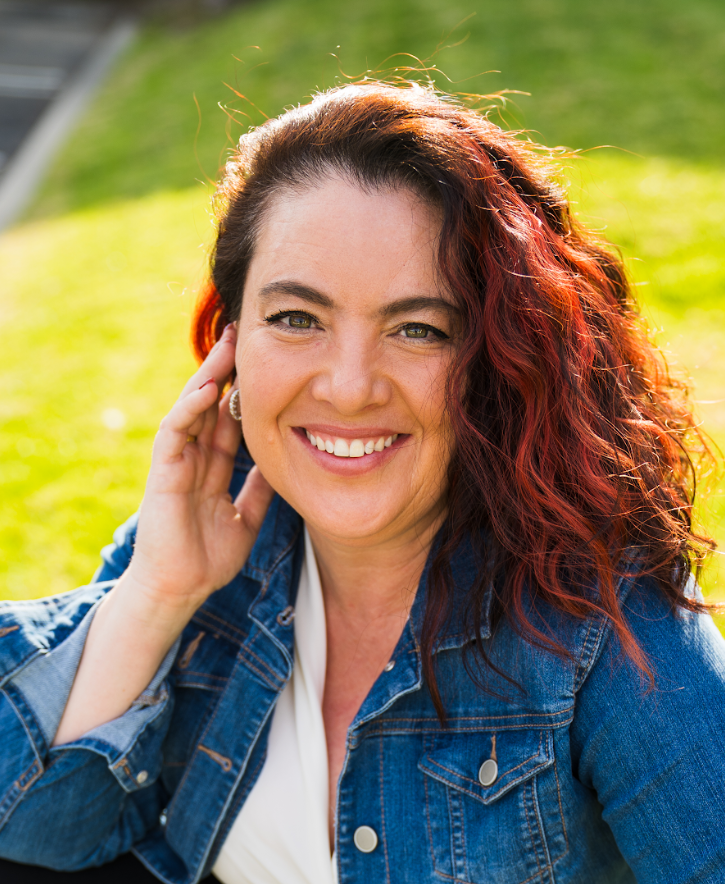
You blend neuroscience, NLP, and Performance Intelligence in your coaching. How do these elements work together to create real change?
I hear this all the time. “I didn’t know you could use NLP like that.”
Most people are taught to use NLP and similar tools for internal change, to shift their own mindset, confidence, or beliefs. And that’s valuable. But I started to see a different application.
I realized you could use those same principles in real time with an audience. Not just to change how you feel as the speaker, but to influence how your audience thinks, what they feel, and how they respond while you’re speaking.
That’s where everything changes.
Because of my background in human behavior, I can spot patterns quickly, often the ones that are quietly holding someone back. And in many cases, we can shift those patterns in real time, so they don’t just understand what to do differently, they actually experience it on the spot.
Neuroscience helps you understand how people process information and emotion. NLP gives you the language patterns to guide that process. And Performance Intelligence is how you deliver it through your voice, your body, your timing, and your presence.
When all three are working together, you’re no longer just sharing information. You’re actively guiding the audience through a shift as you speak.
That’s what allows my clients to move from simply presenting to driving real-time decisions in the room, creating impact across an entire audience at once.
What’s one common mistake you see even experienced speakers make—and how can they fix it?
One of the biggest mistakes I see, even with experienced speakers, is that they have no awareness of the message they’re sending without words.
They’ve refined their content, they know exactly what they want to say, and on paper, it’s strong. But they’re not paying attention to what their body, voice, and energy are communicating at the same time.
And that’s where the disconnect happens.
You can be saying all the right things, but if your delivery doesn’t match it, the audience feels that immediately. It affects trust, connection, and how your message is received, even if people can’t explain why.
That’s why some speakers sound great on paper, but don’t get the level of influence or traction they expect in the room.
A simple way to start fixing this is to ask yourself one question while you’re speaking: “Does what I’m saying match how I’m coming across right now?”
Most people never check for that in real time. But the moment you do, you’ll start to notice where your tone, your energy, or your body language is out of sync with your message.
That awareness gives you the ability to adjust on the spot.
And when your verbal and nonverbal communication are aligned, everything accelerates. People don’t just understand your message, they buy into it. And that’s what creates real momentum, where one message can influence an entire room at once.
You help people sell out offers through authentic speaking. What’s the secret to turning a talk into real connection and conversion?
Most people think selling happens at the end of a talk, when they make an offer. But by that point, it’s already too late. The decision is actually happening throughout the entire talk.
Every story, every example, and every point is either building belief or creating doubt.
The speakers I work with learn how to structure their message so those moments are intentional. They learn how to guide the audience through recognizing the problem, seeing themselves in it, and realizing what needs to change.
They also learn how to use their language and delivery in a way that builds belief step by step, so they’re not waiting until the end to sell.
When that’s done right, the energy in the room shifts and that’s when offers sell out.
Because by the time the offer is presented, it doesn’t feel like a pitch. It feels like the obvious next step, and the audience doesn’t want to miss it.
Can you share a transformation story of a client who went from nervous to masterful on stage?
One of the biggest misconceptions is that nervousness only shows up in beginners. What I see more often are experienced speakers who sound confident, but their body is telling a completely different story.
I worked with a client who was preparing to speak in front of about 700 people. He had a strong sense of ease speaking in front of an audience, but his body language was saying something very different. It was communicating tension, insecurity, and a focus on getting his words right, rather than the experience he was creating for the audience.
After just a few sessions, the shift was immediate. He dropped the slides, let go of the script, and started engaging the room in a completely different way. He created an experience the audience was part of.
The difference was immediate. He was engaging, fluid, and fully in control. Afterward, the feedback was clear. People said he was the best speaker of the entire event.
He left them wanting more, and he sold more than he ever had at an event. That’s what Speaker Mastery looks like.
What do you believe makes a truly epic speaker today—especially in a world full of noise and short attention spans?
Most people think what makes a great speaker is strong content. I don’t.
We’re in a time where attention spans are short and distractions are constant. You can have incredible ideas, a clear structure, and all the right points, but that alone doesn’t make people lean in or take action.
You can talk at people. You can make offers. But selling them out, getting people to buy into your ideas, your philosophy, and what you’re presenting requires a very specific skill.
It’s the ability to engage people in real time and involve them in the experience so they’re not just listening, they’re processing, reacting, and starting to see things differently while you’re speaking.
That’s what creates connection. That’s what creates conversion and it’s not something you’re born with. It’s something you can learn.
When you watch a speaker who really knows how to do this, you can feel the difference. You see yourself in what they’re saying. You recognize how it applies to you. And you start to feel like this is exactly where you need to go next.
For someone ready to step into their next level of Speaker Mastery, where should they begin?
If you’re ready for the next level of Speaker Mastery, you don’t start with more content, more slides, or another script.
You start by auditing your speaking.
Because most speakers have no idea what they actually look like, sound like, or communicate in real time. They think their message is landing, but they’ve never seen where they’re losing the room, where their delivery is out of sync, or where the opportunity for real connection and conversion is being missed.
The next level isn’t about adding more. It’s about seeing what’s already happening and being able to refine it with precision and that requires trained eyes.
Because you can’t see yourself the way your audience experiences you. You’re focused on what you’re saying, not how you’re coming across.
That’s why trying to fix your speaking by yourself only takes you so far. At some point, you need someone who can see what you can’t, call it out clearly, and show you exactly how to shift it in real time.
And once you experience that level of awareness, things change quickly. In seconds, you start to shift how you show up, and the only option is to operate at a completely different level.