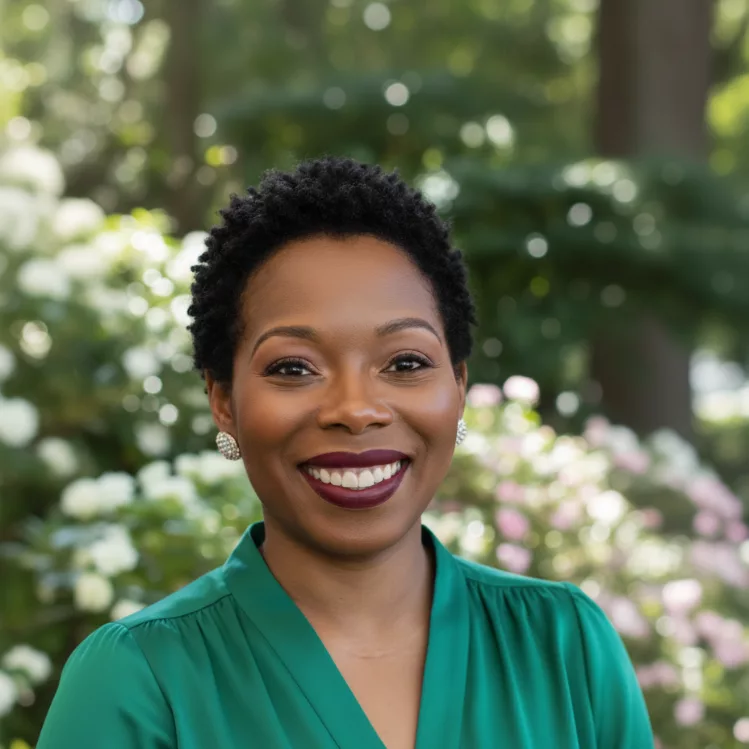



Sherry Finkel Murphy: Disrupting Financial Planning with On-Demand CFP® Services
Sherry Finkel Murphy, CFP®, RICP®, ChFC®, has never been one to wait for permission—especially when it comes to women’s financial empowerment. In early 2023, faced with a corporate mandate that threatened the freedom she had built into her life, Sherry made a bold choice: sell her portfolio, transition her clients, and launch Madrina Molly™, a first-of-its-kind virtual CFP®-on-demand service for women “of a certain age(ncy).” Today, she’s rewriting the rules of retirement, challenging outdated money narratives, and helping women over 50 claim the financial confidence to reinvent themselves. Her mantra is simple: if the table isn’t built for you, build your own—and invite others to join.
What inspired you to start your business, and what challenges did you face in the beginning?

My desire to help women, especially women over 50, become confident in managing their money has always been a labor of love. In early 2023, just as my spouse and I had committed to live between Ohio to support kids/grandkids and New York to support my 97-year-old Mom, FINRA announced that Financial Advisors were required to be back in the office 51% of the time. Our COVID flexibility was officially over.
I had to make a quick decision, and I decided to sell my portfolio, spend 2023 transitioning my clients to other advisors in my practice, and launch a virtual CFP®-on-demand service, Madrina Molly: Financial Wisdom for Women of a Certain Age(ncy).
My challenges have been around marketing and social media. I love to write, model, and educate. But I have no patience for what takes me away from the reason people seek me out: My financial planning ability. I confess that continues to annoy me.
How do you balance being a successful businesswoman with personal life, and what tips would you give others trying to do the same?
I’ve learned to stop trying to have it all at the same time. Some things don’t balance out. But I’ve also become adept at engaging my family in my efforts and making them part of the success. I’ve asked my husband to help chop vegetables when I was heads-down in studying to pass a credentialing exam. I’ve asked my Mom what she needs to feel secure so I can leave town for a few weeks at a time. I’ve asked friends to participate in anything I need to keep myself accountable to my goals.
What has been the most rewarding part of your entrepreneurial journey so far?
Removing myself from financial compliance overhead has unexpectedly enabled me to enter rooms full of women I want to spend time with. These are my peers, my mentors, and my proteges. They are private investors, entrepreneurs, and really, really smart women. And when I can add value or answer a question that has been causing them to lose sleep, that’s truly rewarding.
How do you stay motivated and continue to grow your business in an ever-changing market?
I am doing something disruptive in the way I am delivering financial guidance. While there are many finfluencers, there are very few credentialed financial experts. I think, as I get the word out, my model—subscription guidance and owning your financial model– will be more interesting. I also collaborate with full-service Advisors to help with matters that their compliance won’t let them touch. It makes everyone look good, and that’s the best kind of business to conduct.
I think that most people quit their endeavors too early. Everything is hard. I’m just choosing my hard.
What role do mentorship and networking play in your success, and how have they shaped your career?
I spent almost 30 years in big-ticket technology sales and sales leadership prior to my financial career. Thus, I am a person who tries to spin up a new networking zoom or two weekly. A great network is a business pipeline too.
My goal is to be a wonderful ambassador for others and to teach them how to return the favor by telling them, literally telling them, who my ideal member is and what would make someone want to join Madrina Molly. I will spend the first part of my meeting asking about their business, encouraging them to identify their ideal client very specifically, and expecting them to make an “ask” of me.
As an aside, we should never enter any kind of networking relationship without an ask. If someone says, “How can I help you get what you want?” you’d better have a specific answer.
As I enter the Global Woman Club network, I’ve been teaching this method of ambassadorship to the women I meet. And it’s so natural that I hope they repeat it themselves.
What are the key factors that have helped you maintain a strong leadership presence in a male-dominated industry?
I’ve been angry for over 40 years. Why stop now? Seriously, like healthcare, the financial planning domain is built on the data of 20th-century white men. I know, from my own career, marriages, and caregiving experiences, that women do not experience money the way men do. We don’t receive it, save it, or spend it the same way. Frankly, we’re better with money because we’ve always had to be. And I bring a strong alignment with alpha women who see that I know what their lived experience really is because it’s been mine too.

How do you approach risk-taking, and what’s the best risk you’ve taken in your business career?
There are two ways to increase our ability to accept risk: the first is to have nothing to lose. If you can only move forward, you move forward, fear notwithstanding. Women, especially those in impossible situations, understand this and usually prevail.
The second way to increase our ability to accept risk is to understand what kind of safety net counterbalances it and put that safety net in place. My ability to make risky investments is counterbalanced by safer investments. My ability to ignore a falling stock market is based on having enough out-of-market assets that I won’t need to take money from a down market.
The best risk I have ever taken was to go into sales, even though I accepted what today would be the kind of discriminatory pay package that violates the law. I had a new mortgage in NYC and was frightened that I’d lose everything. But I became the Rookie-Salesperson-of-the-Year. I learned to have faith in myself and to always consider myself self-employed, whether or not I was hired by a corporation. Perhaps that’s an example of an impossible situation. But I learned what I am capable of by being tested. If you’re never tested, you won’t know.
What advice would you give to aspiring women entrepreneurs who are just starting?
I would encourage women to ask for bigger things and remember to treat yourself like a business, which means careful accounting of what’s a good investment of time and capital and what’s not. Sometimes we are timid and don’t say what we want to the universe (or to our networking ambassadors via Zoom!)
How do you see the future of women in business, and what changes do you hope to see in the coming years?
Manufactured scarcity is a thing. If there were a moral imperative to fix pay inequity, executive leadership diversity, and a million other things, it would have been done with the stroke of a pen. Whenever women make progress, those who occupy the power structure will baulk and perceive it as a threat. They’re not interested in sharing.
As a result, I believe we owe it to ourselves to stop looking for a seat at someone else’s table and just create our tables and pull up our chairs. We spend too much energy trying to work within the system. I’m for parallel infrastructure. And because our leadership and employees will better align with our clients/customers, we will be successful.
I also want to see women invest in longevity tech, ed tech, and health tech that affects women and minorities far more than men. We can be the change we want to see in the world. And, while our wealth is distributed, we can still exercise it as a collective. I think we’re on the cusp of a lot more of that. There are proposals before the U.S. Congress to change the way investor accreditation is handled that will make private investing more accessible. We’ve seen that with crowdsourcing legislation. Women know a good idea when they see one. Many crowdsourcing opportunities start with $100.
What are your plans for the next 5 years, and how do you plan to continue growing your business and impact?
My goal is to increase Madrina Molly membership by 2500 subscribers per year at least. That’s a number that will require me to bring on an additional CFP® Professional and will pay for technological platform expansion.
In 10 years, I intend to sell Madrina Molly to successor Madrinas and continue as a venture investor and mentor to women’s businesses.
This fall, I will be launching what I hope will be monthly webinars to build a pipeline and gain even more recognition for the brand.