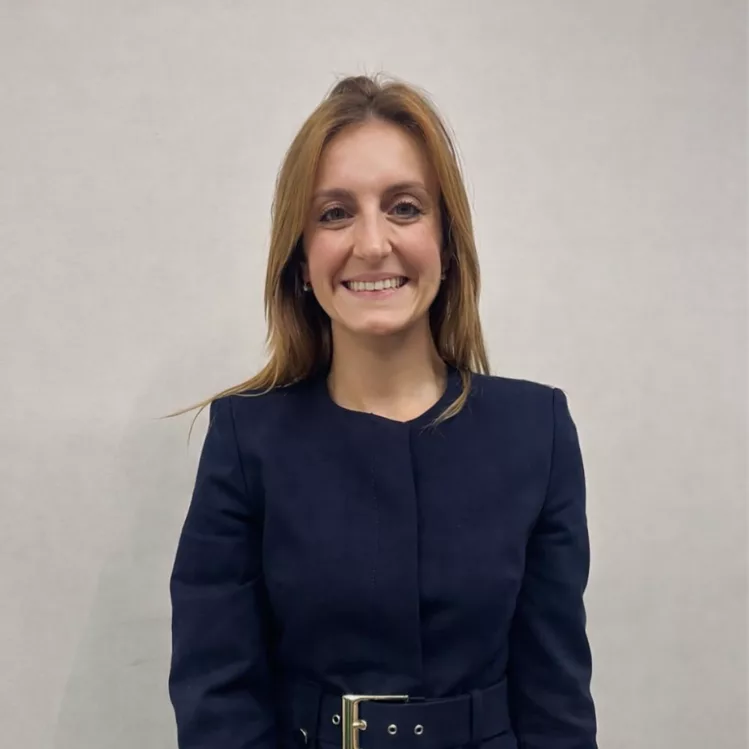



How Sera Johnston Is Redefining Leadership for a Changing Workplace
With over 25 years in Learning & Development, Sera Johnston has mastered the art of turning workplace challenges into opportunities for growth. A strategist, coach, and bestselling author, she blends professional expertise with lived experience to help leaders and teams thrive. Today, she’s redefining what leadership looks like in an inclusive, resilient, and ever-changing world.
You’ve had over 25 years in Learning & Development—what first inspired you to enter this field, and what keeps you passionate about it today?

I actually started my employment as a hairdresser, that was my first passion, working for a well known salon in London, the hub of creativity and loved every minute. After a while I changed focus and moved into learning & development. Here I found a different type of creativity that made a lasting change to people’s lives. Over the years I’ve seen people transform their lives where once they held the belief it wasn’t possible. The truth is I do not see barriers, I believe anything is possible. What keeps me passionate is I love seeing people become who they are meant to be and fulfill their ambitions, professionally and personally, not stuck in their own stories of thinking it’s not possible for them. I keep developing and learning myself, honing my craft to bring the very best to my clients. Authenticity is one of my values, and it’s important to me I practice what I preach. My experience and knowledge has awarded me Fellow with the CPD Institute which recognises that I have contributed significantly to the learning of others.
From your time in the NHS to corporate leadership, what lessons have stayed with you about building thriving workplace cultures?
This is an interesting question, it’s really very simple. It starts with authentic leadership. A leader who creates trust, psychological safety within their team and is emotionally intelligent. I’ve seen organisations repeatedly quote their values but in practice the culture in the workplace is the complete opposite. Building thriving workplace cultures is about leaders willing to develop themselves and not be complacent believing they do not need development. Willing to see mistakes as an opportunity to learn and grow not just for themselves but also embodied within the team. A leader who transforms how they lead and addresses their own challenges. Its empowering each member of the team to reach full their potential utilising their own individual strengths. During my time in the NHS I’ve worked with many teams across services, both in acute settings and community. One consistent theme running across all teams is collaborative working, either with their own teams or other stakeholders. I was regularly asked to facilitate team away days, either bring teams together for a better working relationship, addressing specific areas within the team dynamics or working strategically. Building thriving workplace cultures is everyone’s business therefore it adopting a proactive approach not a reactive one.
Many organisations struggle with “one-size-fits-all” training. How do you approach designing tailored interventions that really stick?
It begins with exploring the real issues. Many training interventions address the surface level and roll out a standard training programme. My approach is peeling back the layers, asking the right questions and then co-creating the solution that best meets the need. I deliver what people need and address what they want. Each solution is different. Some may include a combination of training, coaching and mentoring. While others may include facilitation with follow up sessions. Its never about that particular problem or challenge therefore I explore and gain an understanding how this impacts the wider orgainsation. I co-create solution that have a lasting impact, not supply a sticking plaster as a tick box. Every intervention regardless of the package will include a review after a period of time. This is to address two main areas, firstly the impact this has had in the workplace and secondly to iron out reflections and thoughts from delivery.
Emotional intelligence is a key part of your work—how do you see it transforming leadership in today’s workplaces?
Emotional Intelligence is in my view the foundation for any leader or manager aspiring or existing. It’s so important they understand not only their strengths but also areas which are challenging for themselves and when they interact with others. Leaders high in emotional intelligence create value and influence through their capacity to identify with the emotional experience and aspirations of their people, and build shared identities with them.
They are able to establish trust, understand people’s need to belong to a group and therefore establish effective teams.
They create and communicate compelling visions, develop a plan for action, and lead through their ability to inspire people to act together. This increases both employee engagement and retention.
Leaders are able to guide people to action from within by engaging the prime movers of behaviour – emotions.

Your journey as a working parent of a child with Cerebral Palsy is deeply inspiring. How did that experience shape your perspective on leadership and inclusion?
Being a working parent of a child with a disability was a personal choice. It was extremely important to me continuing in a career I loved while in parallel as a parent being a role model for my child. Although extremely challenging, juggling both, it widened my perspective that individuals coming to work are doing so not showing up as their true self. They somehow felt creating a version of themselves, a persona, that wasn’t authentic was better than being transparent because of the current culture within the workplace. It’s important as a leader having the awareness that each individual is made to feel comfortable showing up as themselves and the leader creates an environment that allows non judgmental discussions. Its also extremely important that an individual circumstances as a working parent is not used against them and are treated fairly among their peers.
Fundraising £75,000 in just six months for your daughter’s surgery is an incredible feat. What did that chapter teach you about resilience and advocacy?
Oh wow, I remember others around me saying it was impossible to achieve yet somehow I knew different. For me this had to be done, even though I had no experience of fundraising and it was exhausting. What I did learn is, by bringing people together with a clear intention, you create a community. Some were complete strangers, others not, yet all pulled together with ideas and a sense of purpose to do what was needed to reach our target. I have the utmost respect and forever grateful to everyone who played a part in making this happen.
You also support organisations in creating inclusive practices for parents of children with disabilities. What are some blind spots employers often miss?
There is a hidden cost which organisations miss, these include
Employee Burnout, common among parents requiring extended sick leave.
Talent Retention, many consider leaving due to lack of flexibility, representing loss of institutional knowledge and recruitment costs.
Reduced Performance, many parents feel constantly stressed about asking for support, which impacts their ability to focus and contribute fully.
Diversity and Inclusion, current approaches may inadvertently discriminate against employees with caregiving responsibilities, limiting organisational diversity.
Fear of Career Impact, many are concerned about being perceived as less committed or reliable preventing from asking for needed support.
Lack of Awareness, its common managers often don’t understand the complexity and unpredictability of special needs caregiving.
The emotional labour is a blind spot which often is hidden and not in the awareness of many organisations. These include
Constant advocacy for their child’s needs
Navigating complex systems and fighting for services
Managing uncertainty about their child’s future
Dealing with societal judgment and workplace stigma
You’ve been recognised as a bestselling author, speaker, and one of the Top 10 Inspirational Women. Which achievement are you most proud of—and why?
I am proud of all to be honest. At school I was average, not in the academic or sporting camp. So even the idea of writing a book was never an option. Holding my first book in my hand for the very first time was very special, not just that I had actually written it but proved to everyone who doubted my abilities. Being named top 10 Inspirational Woman was shining a light on all the women I have supported and raised awareness of the ongoing challenges facing parents everyday. I feel honoured each time I get to speak, to share and engage in discussions that make the audience think differently or gain a better understanding.
For parents of children with disabilities who feel overwhelmed or invisible, what first steps do you encourage them to take to reclaim their identity?
The first steps are to stop and just take a moment. Take a look at why you feel overwhelmed or invisible, actual facts and examples not the story you’ve created and telling yourself. List these facts and examples down. Next for the overwhelm, what would not being overwhelmed look like. What are the immediate priorities and is it you that has to do this. Make a list in order of importance and the best person to take this on. What additional support would help you.
If you’re feeling invisible, when do you feel like this? If it’s not being heard or seen when speaking, practice repeating yourself in a way that changes the way you say it so you’re not sounding repetitive and start by addressing the person you’re speaking with by their name.
Looking ahead, what changes would you like to see in leadership development and organisational culture over the next decade?
I feel connection is as important as ever. I’d like to see leadership development and organisational culture evolve in ways that make work more human, adaptive, and future-ready. Leadership development should focus on who leaders are becoming, not just what they can do, and organisational cultures should shift from being productivity-first to being human-centred, adaptive, and ethically responsible.
Authentic leadership: Moving away from the idea of a single charismatic leader and toward leaders who can cultivate distributed leadership, empower teams, and build resilient systems.
Focus on inner development: Training leaders not only in strategy and execution, but also in emotional intelligence, humility, adaptability, and self-awareness.
Continuous, experiential learning: Leadership programs shifting from one-off courses to ongoing, lived development—through mentoring, cross-functional projects, and reflective practice.
Psychological safety as the norm: Cultures where people feel safe to speak up, fail, and learn without fear of blame.
Flexibility and trust: Organisations measuring output and value rather than presenteeism, while supporting hybrid and asynchronous work without stigma.
Purpose-driven workplaces: Embedding clarity of “why” into daily work, not just as a corporate statement but in how decisions are made and priorities are set.
Wellbeing integrated into design: Making mental health, rest, and human rhythms part of how work is structured, not just offering perks. Embodied in the cultural fabric of the organisation.
Cultures of curiosity and learning: Normalising experimentation, rapid feedback loops, and collaborative problem-solving.
Flattening hierarchies: Moving away from rigid command-and-control to networks of teams, with transparent communication and shared accountability.