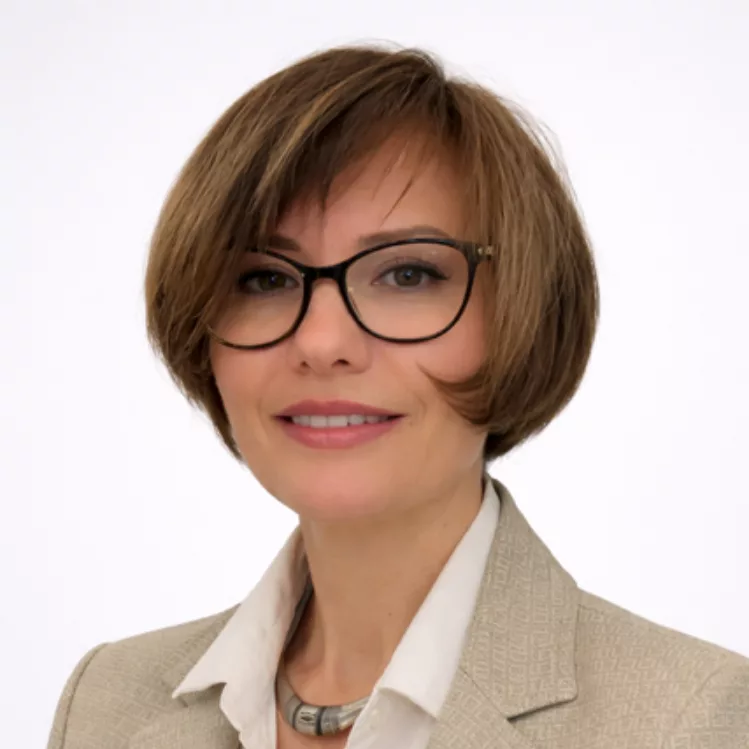



Nancy Chou: Licensed to Lead
Bringing German Quality to Asia
Nancy Chou is redefining what it means to be a global entrepreneur. From navigating Germany’s complex pharmaceutical licensing process to building a trusted bridge between German-made health and beauty products and the growing Asian market, she’s proving that vision, persistence, and innovation can break barriers. As a certified pharmaceutical wholesaler, nutritionist, and mom of two, Nancy blends business acumen with personal passion—creating a brand rooted in quality, trust, and global impact.
“Bringing quality, trust, and innovation together, I lead not just with strategy—but with heart and vision across borders.”
What inspired you to get into the pharmaceutical wholesale business, and what was it like getting your first license in Germany?

We’ve been wanting to offer the Asian market high-quality German-made products, including health supplements and beauty products. And we see that the customer is increasingly concerned with the quality control of sourcing and delivery. Therefore, we want to demonstrate to our client that we are a certified company by the highest German Standard, allowing them to trust our company more. Meanwhile, this certificate allows us to source more broadly and directly with German pharmacies/wholesale companies, which could potentially bring us price benefits and further cooperation. On the other hand, it also enables those German companies to get exposed to the Asian audience.
It is hard for a foreigner whose mother language is not German. We had luckily found a consultant who specialises in the Pharmaceutical GDP process for over 40 years. Who guided me through the process? The whole preparation probably took over 1 year. And the review of the application also took another half a year. Afterwards, I was very touched to finally receive this certificate.
The licensing process can be pretty tough—what were some of the biggest lessons you learned while going through it?
Always focus on bringing a minimum viable product (MVP) to the market and consider that this is part of your milestone, but not a stop. The bigger picture for us is still about how to maximize the use of this license for our business.
Minimum Viable Product, meaning that we start with our current resources, instead of investing big in infrastructure or resources (manpower as well). Typically, we think that becoming a certified pharmaceutical wholesaler, meaning you have to hire lots of health professionals (pharmacists) or investing in building big warehouses (over 10,000 m2). But I always try to consult the experienced people from my network, on whether we could do things on a smaller scale. I managed to also persuade our current warehouse partner to join us on this journey (getting Good Distribution Practice certified).
How do I come to this career point today, business founder?
After my study of Nutrition, I came to study Business Management in the Netherlands. Afterwards, I have been working in the e-commerce field. Throughout my work, I was able to participate in a publicly listed German e-commerce company that sells baby products to Chinese customers. Also, as a Project Manager in an e-commerce IT Solutions company that brings automation and agility to e-commerce companies. Both experiences trained me to build a lean business operation that serves the market pain points. In 2025, it coincides with a major working environment in society, about ‘one-person Entrepreneurship’ with AI Solutions.
What are your other titles in life? You’ve started sharing your life as a Nutritionist Mom in Germany with a Chinese audience online. What made you want to start that journey, and how has it felt so far?
Aside from being a mom of two, a trained nutritionist, and an energy healing practitioner, I am now focused on coaching women to start side businesses in health supplements and online entrepreneurship. My journey began when I faced a serious health challenge a few years ago. Through adopting a healing diet—detoxing, avoiding trigger foods, and following a medical medium style of nutrition—I was able to restore my health. That transformation ignited my passion for wellness and inspired me to use social media to share the power of diet and lifestyle changes in overcoming autoimmune struggles. Today, I guide women not only to improve their health but also to build financial freedom through purpose-driven online businesses.

When it comes to promoting health and beauty products in Asia, what strategies have worked best for you?
First, healthcare professional endorsements carry significant weight. Recommendations from trusted figures such as dietitians, doctors, or pharmacists add credibility and reassurance, making consumers far more confident in their purchasing decisions.
Second, word-of-mouth referrals remain one of the most powerful tools, particularly among audiences aged 45 and above. This demographic is generally less influenced by social media trends and more inclined to trust the experiences and recommendations of friends, family, and community members. Leveraging this natural trust network helps build strong, long-term customer relationships.
Can you share a time you had to build a custom eCommerce solution for a tricky problem? How did you make sure it worked and added value?
We always strived to automate our e-commerce workflow. so that even with a small team, we can reach the max. efficiency. Our first solution was to build an automated ordering tech product. We have many orders to make daily, either via online website, price comparison portal or via email. We built with Python with predefined pricing selection logic, and made it automatically put stuff in the shopping baskets. It saved us 80% of our time.
Second was the customer logistics data portal. We run our own cross-border logistics. Unlike a universal tracking system like FedEx, DHL. We contract all the service providers separately from trucking, flight, customs clearance broker, to the last mile delivery. For our customers to better track the parcel status, we have connected each data point with different logistic providers and built a customer portal for them to track parcels with different milestones. This increases the transparency and trust of reputation for our brand as well.
With projects across different countries, how do you usually measure success, especially when it comes to keeping customers happy and things running smoothly?
Measuring success means continuous monitoring of quantitative and qualitative customer feedback. Quantitative, meaning the client can rate us after each order (we call it the NPS score). And this is being evaluated quarterly to see any major deviation. qualitative meaning, we check in bi-weekly on reviewing major customer feedback and complaint topics. to see which part to improve on the operational side.
Meanwhile I as a founder, I also check each customer’s messages casually, and respond directly to the customers. to make sure our customer service ‘temperature’ is right and honest.
Have you worked on a project where people from different cultures or departments had to come together? How did you keep everyone on the same page?
We use the OKR method and the Asana board. and keep reviewing it bi-weekly and quarterly. Also, we use a simple prioritization matrix to map out project urgency and importance. to continuously filter out redundant projects. to keep our goals transparent vertically and horizontally. Vertically, meaning people as leadership/C-level directors, should set their goals according to the organizational vision. Furthermore, allowing teams to contribute to these goals. Horizontally, also meaning each team (either from IT, Business Intelligence or User Experience department) can check goals from other departments for full support and transparency.

What personal values help guide your choices, especially when things are moving fast or you’re dealing with different countries and teams?
”open ears for feedback, open mouth for self-expression and open mind for learning.”
In our industry (E-Commerce), things are moving fast, tasks are versatile, and people are most of the time stressed from either new knowledge or various operations.
Although I lead my team, I also make sure I hear and check their feedback constantly, about their workloads, about their lives, about their struggles with projects and so on. To make them feel heard and taken care of. I also express myself verbally each time when I feel fragile. Let my team know I dedicate my heart and energy to our business, to make them feel on board during our ups and downs of the venture.
I open my mind to learning new methodologies and tools. Either from reading books or articles. I make sure I learn new leadership and communication skills. Or the most trending tool that we should adopt in our team. My time is precious, and I make sure I am continuously growing, so that I don’t feel short when I overcome struggles.
Have you ever set up a system to help manage time better on projects? What did you use, and what changed after?
I’ve used many tools. End up using Asana for managing team and personal tasks. And I am still on the free version, and like it very much.
It helps to assign task ownership and deadlines, so everyone to better manage their tasks. It helps 80% in our team’s communication, since we all work in different countries with time differences. Task delegation needs to have a standardized and transparent system. Asana is user-friendly and easy to categorize and assign tasks between stakeholders.