


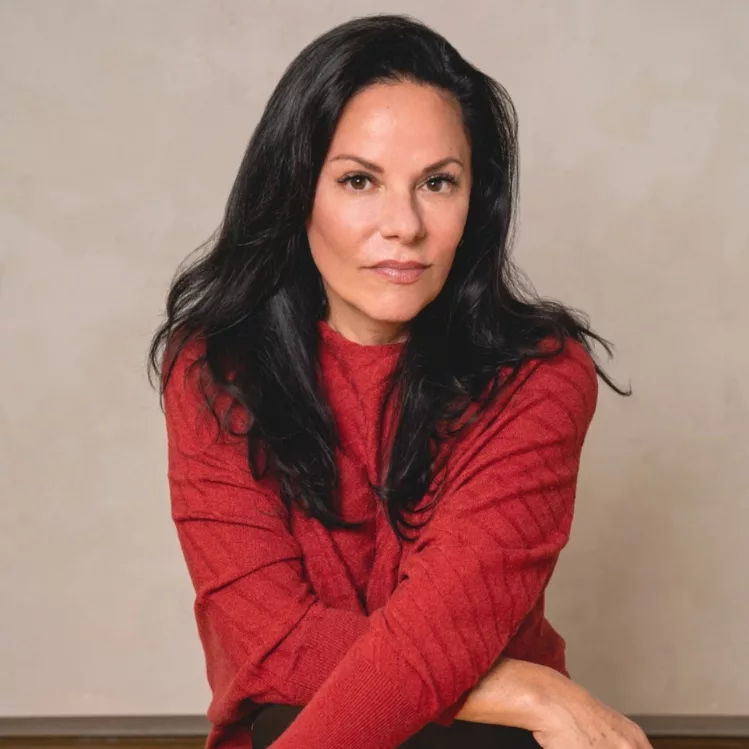
Laura Lee Botsacos Is Built to Close—and Teaching Women to Sell with Soul
Laura Lee Botsacos isn’t your typical sales coach. She’s bold, faith-fueled, and on a mission to help women turn selling into a soulful act of service. As the founder of Built to Close, Laura empowers purpose-driven women to ditch outdated tactics, trust their voice, and lead with unapologetic confidence. With a background that spans industries and a message rooted in empathy and truth, she’s redefining what it means to sell—not with pressure, but with power.
What made you fall in love with sales, especially as something that helps people, not just makes money?

What made me fall in love with selling was realizing that selling is an act of service—a form of stewardship. When done without the “bro tactics” and manipulation, sales is a noble occupation that provides people with what they want and need.
Early in my career, I was thrown into selling cars with zero training, surrounded by men using outdated tactics that felt completely foreign to me. But when I stopped trying to sell like them and started selling like me—with empathy, genuine curiosity, and real care for what people needed—everything changed.
Sales is based on relationship building, connection, and trust. When you approach it from a place of “How can I help solve your problem?” instead of “How can I get your money?”—that’s when the magic happens. Every sale became about matching the right solution to the right person at the right time. It’s about being a bridge between someone’s pain and their possibility. That’s not just business—it’s ministry.
Why do so many women struggle to speak up when it’s time to sell—and how can they start shifting that?
We’ve been conditioned to believe that wanting money makes us greedy, that promoting ourselves makes us arrogant, and that asking for what we’re worth makes us pushy. We’ve internalised this lie that being “nice” means being small, quiet, and apologetic about our value.
The shift starts with reframing what selling is. It’s not about taking something from someone—it’s about giving them access to a transformation they desperately need. When my clients start seeing themselves as the bridge between someone’s problem and their breakthrough, everything changes. You wouldn’t hesitate to tell someone about a restaurant that changed your life, right? Your business, your service, your expertise—that’s someone’s answered prayer. You’re not being pushy; you’re being helpful.
You work with women in big life transitions. Why is that such a powerful time to learn how to sell?
Transition is where transformation lives. When women are in the middle of career changes, divorces, empty nesting, or any major life shift, they’re already shedding old identities and stepping into new versions of themselves. That vulnerability—that raw, honest place—is their superpower.
Women in transition have already proven they can handle hard things. They’ve already been forced to get uncomfortable. Now they just need to channel that same courage into their business. They’re not attached to “how things have always been done” because their whole life is being rewritten anyway. They’re hungry, they’re motivated, and they’re ready to bet on themselves in ways they never were before. That’s the perfect storm for sales success.
How does selling with empathy look in real life? Can you give an example?
Empathy is found in what I call the emotional excavation—using questions that are NOT just about uncovering information, but about unearthing the client’s real desires. This concept of “always be closing” is outdated. The truth is “always be connecting.”
Some ways to express empathy during a sale is to ask open-ended questions that help you guide the psychology of the sale. In my “Ask Like You Mean It” method, How, What, When, and Who are four powerful words that should lead your sentences during a sales conversation. This form of emotional excavation is the art of digging past surface-level objections, facts, or features and getting to the real reason someone buys. A Harvard Business School Study stated that 95% of purchase decisions are subconscious, meaning they’re rooted in emotion, instinct, or identity alignment.
I remember working in plastic surgery when a woman came in who couldn’t commit. She was ashamed and scared, and very guarded. Instead of pushing her toward a procedure, I used gentle yet open-ended questions to understand what was happening. Through our conversation, I discovered her husband had cheated on her, and she felt “ugly.” Her desire for plastic surgery was rooted in something much deeper than physical appearance—it was about reclaiming her sense of worth and beauty after betrayal.
That moment changed the entire transaction. Once I understood her real “why,” I could speak to her heart, not just her concerns about the procedure. She didn’t just buy the surgery—she bought back her confidence. And that’s only possible when you dig deeper than surface-level objections.
Empathy is a superpower. It’s about meeting people where they are, not where you think they should be, and caring more about their transformation than your transaction.
How does your faith show up in the way you do business and support others?
My faith is the foundation of everything I do. I believe God gave me my gifts not to hide them under a bushel, but to use them boldly in the service of others. My faith keeps me humble, and that humility helps me recognize that we all suffer from some human frailty and we are both the teacher and the student. Faith means I operate with abundance, not scarcity. There’s enough for everyone, so I don’t need to compete or compare. Faith means I trust the process, even when I can’t see the outcome. And faith means I see every client as someone God has placed in my path for a reason—my job is to steward that relationship with integrity and love.
I also believe strongly that God wants us to prosper. Making money from our gifts isn’t selfish—it’s stewardship. When we thrive, we can give more, serve more, and impact more lives.
What’s one lesson from your early sales days that still guides you now?
The moment that changed everything for me wasn’t closing a huge deal. It was a random Tuesday. A quiet showroom. And a woman who walked in—just like you might walk into any business today—looking lost.
She didn’t want a Hummer. She wanted confidence. She wanted someone to see her. To hear her story. And that’s when I realized: selling isn’t about the product. It’s about the person. Her husband had just left her, and she needed to feel powerful again. That Hummer wasn’t transportation. It was a transformation.
That lesson still guides everything: Tell the truth faster than anyone expects. Be honest about what you can and can’t do. But more importantly, see the person behind the purchase. People don’t buy products—they buy better versions of themselves. They buy hope, confidence, and the belief that their life can change.
In a world full of fake, the genuine is magnetic. When you approach every sale as an opportunity to serve someone’s deeper need, you’re not just making a transaction—you’re facilitating transformation.
Many women are afraid to be seen. What’s one thing that helped you show up anyway?
This is a really powerful question, and one I can completely relate to. The Imposter Syndrome, the feeling that you know other people think you’re a joke, yet that hunger inside to serve must outweigh your shame and embarrassment. And it is hard.
So, what I try to focus on is this: no matter what, other people will have their vision of you, their idea of you. Whether you post or don’t—they will think their thoughts. Whether you create that business or don’t—they may be laughing behind your back. Whether you do a live on Instagram or don’t, the judgment exists either way.
So, you might as well do it! Because when we as women stay small, they win. And there is too much to be done in this world to let the giant pillow of society muffle your dreams.
I had to get clear on what I was more afraid of—being seen and possibly criticized, or staying invisible and staying stuck. The fear of staying small became bigger than my fear of being seen. Every time I hesitate to show up, I think about the woman who’s sitting in her car crying because she doesn’t believe in herself enough to ask for the sale. My comfort is not more important than her breakthrough.
What does confidence mean to you now? Has that changed over time?
Confidence used to mean never showing weakness, never admitting I didn’t know something, and always having it together. That’s not confidence—that’s performance.
Real confidence is being willing to be imperfect in public. It’s saying “I don’t know, but I’ll find out.” It’s sharing your failures alongside your wins. It’s knowing that your worth isn’t determined by your performance, but by the fact that you were created with purpose.
Confidence now means I can walk into any room knowing that if God placed me there, I belong there. It means I can ask for what I’m worth without apology. It means I can pivot when something isn’t working without seeing it as a failure. Confidence is trusting that my story—the messy, beautiful, imperfect truth of it—is exactly what someone needs to hear.
How can someone sell in a real, honest way—without feeling fake or pushy?
It all starts with realizing you are not selling the product—you are selling yourself. There’s something every woman in business desperately needs to hear: you don’t hate sales—you hate the way you’ve been taught to sell.
We’ve been trained to pitch like bros, chase leads like it’s swipe-right or die, and discount like we’re still sorry our exes dumped us. Research tells us that up to 90% of women feel uncomfortable selling themselves. Over 70% hold back because they don’t want to seem “pushy.” Most of the time, women are not closing because they have been programmed to deny their womanhood.
But here’s the thing—here’s the exciting part: women have a biological and social edge here. Studies show women are more likely to be perceived as trustworthy, especially when empathy is felt. Trust doesn’t come from features. It comes from safety. From empathy. And that is a skill women naturally possess.
Bottom line? Your power lies in connection. Your edge is your humanity. That’s what gets the sale—not the hard close. Empathy isn’t a soft skill—it’s a sharp sales strategy. Empathy isn’t “soft.” It shortens the sales cycle, grows your deal size, and makes you the one they trust when it’s time to buy.
Because people don’t buy when they feel sold. They buy when they feel safe.
What’s your hope for the women who are just starting to believe in their voice again?
I hope that they realize their voice was never broken—it was just buried under years of being told it wasn’t valuable. Every woman who reads this already has everything she needs inside her. She doesn’t need to become someone new; she needs to remember who she’s always been.
I hope she stops waiting for permission to be powerful. I hope she stops shrinking to make others comfortable. I hope she realizes that her story—every messy, beautiful, imperfect part of it—is someone else’s roadmap to freedom.
Most of all, I hope she understands that the world needs what she has to offer. There are women out there right now who are waiting for her courage to permit them to find their own. When she rises, she gives everyone around her permission to rise too. That’s not just business—that’s legacy.

Laura Lee Botsacos is a Sales Confidence Mentor and the founder of Built to Close,
a faith-fueled platform empowering women to sell with soul, strategy, and unapologetic boldness. Connect with her on Instagram @lauraleebotsacos.