

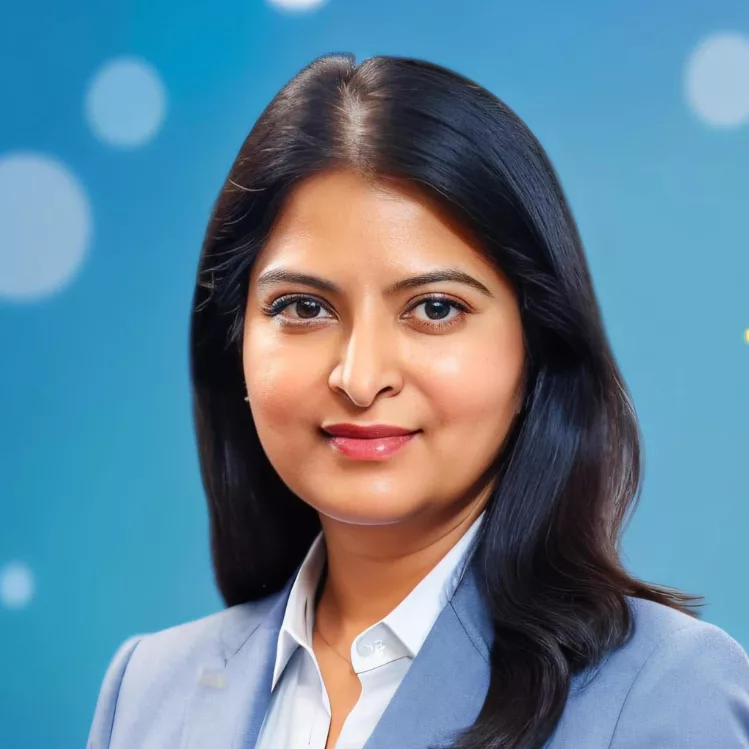
Dr. Sabira Arefin: The Woman Using AI to Heal the World
Dr. Sabira Arefin is an entrepreneur, author, and research-driven innovator whose work brings together AI, education, and global health. Her journey has been shaped by purpose, clarity, and a commitment to use technology with humanity. With a Duke MBA, a doctoral degree, an honorary doctorate, and multiple international recognitions—including features in USA News, CEO Weekly, the Chicago Journal, Top 100 Innovators & Entrepreneurs Magazine, Asia Awards, the World Leaders Summit (UK), and I2Future Awards—she continues to build initiatives that strengthen communities and expand global access to innovation.
Her work across Global Health Alliance, IDMap.ai, and research projects like Eye Intel and Stress Guard reflects a simple philosophy: impact comes from persistence, compassion, and choosing to create something meaningful even when circumstances are difficult.
“AI matters only when it’s human. Compassion turns technology into impact.”
What inspired you to combine technology and healthcare in your work?
My interest in health and longevity came from curiosity rather than crisis. I began to see how important prevention, awareness, and education are—especially as people age. This interest led me to join the Harvard Global Healthcare Leadership Program, where a group of us combined our collective research and expertise into a book that later became an Amazon best-seller.
We then turned the material into an educational course focused on longevity, healthy aging, and improved quality of life.
This foundation naturally expanded into AI-focused research, including Stress Guard, which studies stress as a major factor in long-term health, and Eye Intel, which explores accessible imaging analytics for early insights.
My goal has never been to “fix a broken system.” I have received excellent care. My focus is on education, prevention, and making awareness more accessible.
Can you share a turning point in your career that led you to start IDMap.ai?
IDMap.ai developed long before my work in health research.
It began when we created a neighborhood social platform and realized people couldn’t connect unless location and identity data were accurate. That led us into data engineering, mapping household and business listings, and building structured datasets across regions.
As the data became more precise, major companies approached us to license it. That was the turning point.
IDMap.ai grew from that foundation into a global, consent-based, privacy-first identity and geospatial intelligence platform.
To clarify: IDMap.ai does not work with healthcare data.
My doctoral work explored trust and security frameworks in healthcare data, but IDMap.ai is a completely separate platform focused on compliant identity and accurate data ecosystems.
How do you approach solving big problems with AI in ways that help people’s lives?
Impact begins with clarity of purpose. Technology matters only when it aligns with human needs.
My approach is to:
• Understand the real problem
• Identify who is affected
• Build technology that fits naturally into people’s lives
• Ensure consent, ethics, and privacy are central
The goal is always to create solutions that are practical, ethical, and centered on improving quality of life.
What has been the most rewarding project you’ve worked on so far?
The Global Health Alliance has been especially meaningful because it brings together research, education, and global collaboration.
Transforming longevity concepts into accessible education, and contributing to studies like Eye Intel and Stress Guard, has allowed me to combine my background in data, leadership, and research into work that genuinely helps people.
These projects are purpose-driven and continue to grow organically.
AI in healthcare can feel complex—how do you make it understandable and useful for communities?
I focus on simplicity and clarity.
People don’t need complicated analytics—they need information that feels understandable and actionable.
In preventive health and longevity:
• We emphasize simple habits
• Early awareness
• Easy-to-use tools
• Education that empowers
AI should support people, not overwhelm them, and that principle guides all of our work.
What challenges have you faced as a woman in tech and leadership, and how did you overcome them?
Like many women, I’ve faced moments of doubt, dismissal, and underestimation.
What helped me move forward was:
• Staying grounded in my purpose
• Strengthening emotional intelligence
• Staying focused despite negativity
• Not internalizing other people’s limitations
Persistence often requires continuing even when others don’t understand your path.
Resilience is built quietly, through consistency.
How do you see AI improving global health over the next few years?
AI has tremendous potential in:
• Supporting preventive care
• Expanding health education
• Enhancing early screening through accessible tools
• Understanding stress, aging, and overall wellbeing
Projects like Stress Guard and Eye Intel show how AI can elevate awareness while respecting humanity, ethics, and privacy.
What advice would you give young entrepreneurs who want to make a difference with technology?
My advice is rooted in purpose and clarity:
• Be clear about your why
• Use the Power of Now—start with what you have
• Focus deeply
• Don’t let external negativity derail you
• Protect your health—wellbeing is your foundation
• Develop emotional intelligence; it shapes success more than talent alone
Women often carry invisible pressure. I want them to know they can build remarkable things without losing themselves.
How do you stay motivated and keep learning in such a fast-moving field?
Purpose anchors me. My daughter inspires my resilience.
I continue learning through:
• Research
• Reading
• Collaboration with global partners
• Surrounding myself with people who uplift and challenge me
And I prioritize rest. Growth requires stillness as much as ambition.
Looking back, what do you hope your work will achieve for people and communities worldwide?
I hope my work contributes to:
• Making innovation more human
• Making education more accessible
• Using AI to improve quality of life
• Making prevention a global priority
• Encouraging women to lead with clarity and confidence
If I can help even a small part of that happen, then the work has been meaningful.
“Clarity gives direction. Resilience gives momentum. Start with what you have.”