


Christina Heike: The Soul Architect Transforming Generational Pain into Power
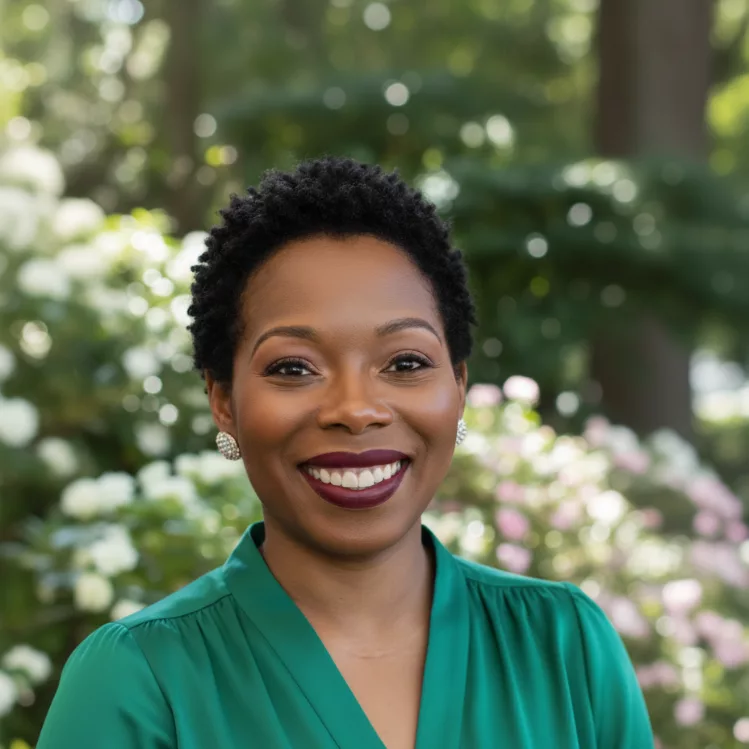
Born in Cold War Berlin, Christina Heike,M.S., M.Ed., CCTS-I, grew up navigating both the external tension of a divided world and the inner conflict of a sensitive soul in an emotionally disconnected family. Today, she channels those early lessons into her life’s work as a Certified Clinical Trauma Specialist, Speaker, and Intuitive Soul Architect / Medicine Woman for the Soul. Through her pioneering practice, Soul Science LLC, Christina helps individuals heal deep-seated parent-child wounds, release generational trauma bonds, and realign with their soul’s true mission. Blending science, spirituality, and forgiveness therapy, she empowers the highly sensitive, the misunderstood, and the “black sheep” to transform pain into purpose — and to remember that connection is the key to healing. Don’t let your past hinder your presence & future. Don’t let your past be a burden to your children. Create your emotional legacy.

You’ve described your childhood in Cold War Berlin as that of a highly sensitive child in a non-sensitive environment. How did this early experience shape your life’s work in trauma healing and soul alignment?
Yes, I often describe my childhood as a Cold War on the outside and a hot war within the family. As the more sensitive, feeling person among those who suppressed their emotions, I felt unseen, unheard, unloved and undervalued — like being on a completely different wavelength. Imagine two walkie-talkies that can only connect when tuned to the same frequency. I wasn’t on theirs, and that created a deep sense of not belonging.
The pain of loneliness, feeling unloved, and being punished for simply being myself affected both my emotional and physical health. That became the fertile ground for my lifelong search for healing and spiritual understanding. Every modality that truly helped me feel better, I went out to learn, not only to heal myself, but to guide others in freeing themselves from childhood and generational trauma at its root. We are here for so much more than being stuck in dysfunctional family patterns.
You’re the only certified New Decision Therapy™ practitioner on the East Coast. What is this modality, and how does it transform unresolved trauma—especially in parent-child relationships?
New Decision Therapy (NDT) is a holistic approach that uses Applied Kinesiology (muscle testing) to access our emotional body without our minds’ story and locate trapped emotions that keep us repeating destructive patterns.
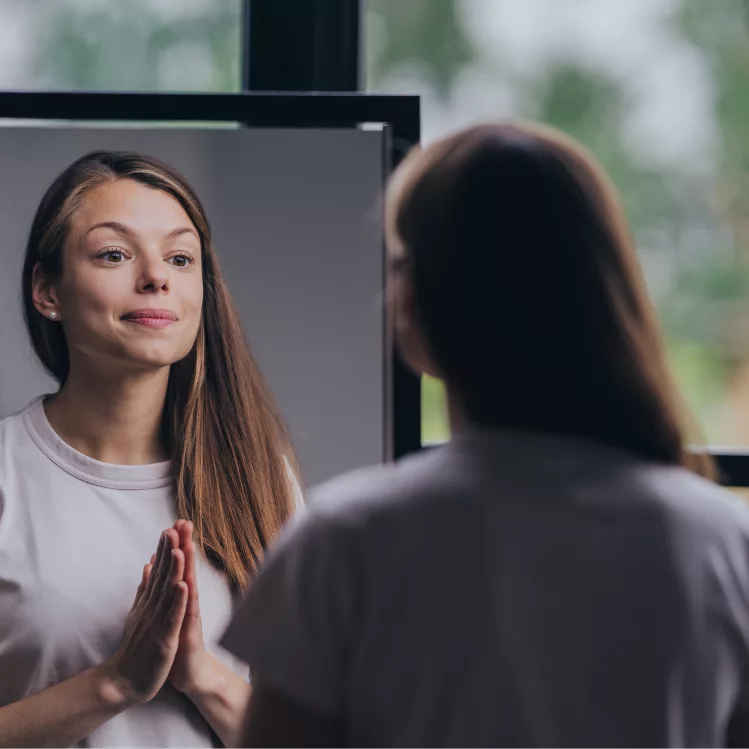
In a session, we identify who was involved in creating the emotional block and which emotions, such as anger, guilt, regret, or shame are stored there. I then guide my clients through a five-step Quantum Forgiveness Process in front of a mirror. This releases the trapped emotion for good. The relief is often immediate.
This work opens space for understanding, compassion, and peace, sometimes leading to more harmonious family connections, other times to clearer boundaries and healthier distance.
NDT was developed by Dr. Kandis Blakely, whose book The Body Remembers was published in 1992. She was far ahead of her time in recognizing that the body holds our emotions and must be the foundation of true healing. I had the privilege of training and working closely with her, and we shared a deep friendship until her passing in 2013.
The phrase “releasing generational trauma bonds” is powerful. What are some signs that someone might be carrying inherited trauma, and how do you begin to work with that?
Signs can appear on multiple levels:
- Emotional: feelings of guilt, shame, anger, or emotional flooding and getting triggered easily
- Physical: chronic tension in your body or stress, sleep disturbances, weight issues (obesity or Bulimia), pain of unknown cause, weakened immune system or autoimmune
- Mental: perfectionism, people-pleasing, avoidance, or intrusive thoughts
- Relational: fear of intimacy (attachment issues), trust issues, feeling misunderstood or misunderstanding other people (communication breakdowns), or difficulties to resolve and repair conflict
Of course, these are only examples intergenerational trauma manifests differently in each of us, and not every illness is trauma-related. The process begins with awareness, compassion, and gentle exploration of what the body and emotions are trying to reveal. I guide my clients through this exploration with my approach of Inner Family Communication (ICF). Getting to know the parts that we suppress is step by step making us whole again. Thus giving us so much more energy to create and live our life.

Many of your clients identify as “black sheep,” “renegades,” or “people pleasers.” Why do you think these archetypes are so common among those seeking healing, and how do you guide them back to their true selves?
The black sheep of the family is often the sensitive, creative, and “different”, intuitive one — the person who sees and feels more deeply. That sensitivity makes them more likely to experience pain as trauma. Remember, trauma is not the event itself, but how we experience it.
Because of this heightened sensitivity, these individuals are often the ones brave enough to seek healing, the cycle breakers who stop the transmission of pain across generations. When they do the work, they not only heal themselves but open space for future generations to live freer lives.
Guiding them back to themselves begins with reconnecting to their bodies and emotions. So many have learned to suppress, deny, or numb their feelings. I teach practical tools like breathwork, creativity, movement, self-massage, meditation, prayer to learn to regulate our Nervous System. From there, we explore mindset, Inner Family Communication and New Decision Therapy to release trapped emotions and restore wholeness.This enables people to create new habits, new emotional & thinking pathways and new outlooks on life. Leading to better relationships in personal and work life.
You blend science, intuition, and spirituality in your work. How do you balance these elements, and how does each play a role in your healing approach?
All three are essential to the human experience and to healing.
Science grounds my work in neuroscience, psychology, and epigenetics. These disciplines give language and evidence to what clients feel in their bodies and emotions. Understanding trauma and the nervous system provides a reliable framework that builds trust.
Intuition, meanwhile, tunes into what’s unique about each person. It helps me sense what a client may not yet be able to name – subtle shifts in breath, energy, or posture. It allows me to respond in real time, following where the (emotional) body leads rather than forcing a method.
And spirituality provides the deeper context why forgiveness matters, why ancestral wounds repeat, and why the “Black Sheep” often carries the lineage’s healing potential. It brings meaning and purpose to the journey.
Think of it this way: science is the map, intuition the compass, and spirituality the north star. The map offers orientation, the compass guides the next step, and the north star reminds us why we’re walking in the first place.

You mention that elevating emotional frequency reconnects people with their soul’s mission. What does that process look like, and why is it essential in today’s world?
Our emotions are like radio waves. When we’re carrying emotional blocks and trauma, our signal becomes full of static. Through forgiveness and emotional release, we clear that interference. Our frequency becomes more harmonious, and we begin to broadcast the authentic song of our soul.
In a world overwhelmed by noise and disconnection, clarity of emotional frequency allows us to live in alignment with our true purpose and to contribute from a place of coherence and clear compassion.
As a repeat immigrant and solo parent, how have your experiences of transition and resilience shaped your ability to hold space for others?
My own childhood and generational trauma work laid the foundation for resilience and built my capacity. Solo parenting and immigrating multiple times would have been far more challenging without that inner groundwork of forgiveness and self-regulation.
Life will always bring new layers of growth, but when you’ve built a solid emotional foundation, even the storms become teachers. That’s what it means to be a lifelong learner – evolving with grace rather than reacting from old pain.
Forgiveness seems central to your method — especially your “laser-sharp” forgiveness work. What are some common blocks to forgiveness, and how do you help clients move through them?
Here are a few of the most common barriers I see:
- Wanting to hold onto anger, resentment, or guilt
- Avoiding pain through numbing oneself, denial or distraction
- Believing forgiveness means excusing the harm
- Remaining subconsciously attached to the victim role
- Seeking revenge or justice before peace
- Assuming forgiveness is purely a religious concept
Forgiveness is one of the most misunderstood tools. When practiced correctly with guidance, compassion, and structure it doesn’t excuse harm; it liberates the heart.
With four decades of experience across cultures and modalities, how has your understanding of trauma and healing evolved? What has stayed constant?
What has remained constant is my conviction that all answers lie within us.
What has evolved is my understanding of the tools and my compassion for the complexity of human emotions. Over time, I’ve learned to meet my clients exactly where they are, not where I think they should be. Healing requires both skill and humility.
You often say, “The world needs us.” What message do you have for those who feel called to heal others but are still healing themselves?
The world needs us to stop numbing, denying, or pretending. We need clarity – emotional, mental, and spiritual to make wiser choices for ourselves, our families, and our planet.
We are all in the process of healing. But it’s important to discern when we’re ready to guide others. When we’ve done enough inner work to hold space without projecting our own pain, that’s when our healing becomes service.