


Children’s Mental Health: What’s Changed and How We Can Help
By Adel Houten
When I look back at my own childhood in the 1970s and 80s, life felt very different. We were out on the park for hours, running, playing, climbing trees, mud under our fingernails. You knew it was time to head home when the street lights flickered on, not because your phone buzzed with a reminder. We were allowed to be children. Compare that to now, and the picture is far less carefree. Children’s mental health has taken a sharp decline in recent decades. Research shows that children today are three times more likely to experience mental health problems compared to 40 years ago. This is not a small shift, it’s a crisis.
What Has Changed in a Generation?
For one, the world is noisier. Children today are surrounded by constant stimulation, social media comparisons, 24-hour news cycles, and an education system that pushes performance from an ever-younger age. There is less unstructured play, less time outdoors, and far more time spent staring at screens. The nervous system, which thrives on rhythm, rest, and regulation, struggles to find balance in such conditions.
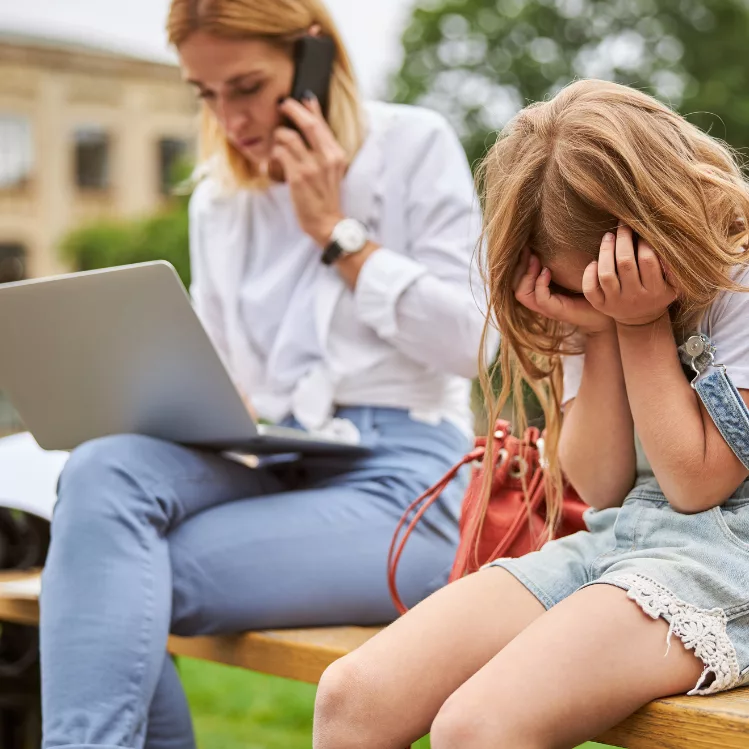
On top of this, we still live in a culture where children are often told to “be brave” or “don’t cry,” which teaches them to push down emotions rather than process them. The subconscious mind doesn’t just forget those moments. Instead, it holds on to them, storing the unprocessed feelings as imprints that can shape beliefs and behaviour well into adulthood.
Trauma is not always a dramatic event—it can be as simple as feeling unsafe or unseen in a moment that mattered to the child.
Real-Life Experiences
I see this first-hand in my work. One little boy, just seven years old, came to me struggling with stress and overwhelm. I gave him a copy of my book Enchanted Fairy Taps, which introduces children to EFT (Emotional Freedom Techniques) in a magical, playful way.
The following week he came back with a huge smile and said, “You know, when I have a really hard day at school, I come home and I do my HappyTappy spell, and then I feel great!”
That simple tool gave him power over his emotions, and his whole face lit up with the pride of knowing he could help himself. Could you imagine what would happen if every child had access to something like this?
That’s part of the vision behind Tapaway, the EFT app I’m developing. It brings tapping into children’s (and adults’) hands in a way that is accessible, practical, and empowering. It helps them calm their nervous system, release stress, and rewire unhelpful thought patterns before they take root.
How We Can Support Children’s Mental Health
Normalise emotions: Let children feel what they feel without rushing them to change it. Safety is built when a child knows their emotions are valid.
Balance tech with nature: Encourage outdoor play, mud, and laughter. It’s medicine for the mind.
Give them tools early: EFT is simple, gentle, and highly effective. Even young children can learn to tap through their worries.
Create rituals of connection: Shared meals, bedtime chats, or even a daily gratitude practice build subconscious security.
Introduce spiritual practices: Mindfulness, breathwork, or simply reminding children they are more than their current worry gives them resilience.
Children today are facing challenges we never had to face, but they are also incredibly open, intuitive, and capable of learning tools that can support them for life.
If we can give them techniques like EFT, stories that inspire, and the freedom to be children again, we are not just healing the present, we are shaping a healthier future.
Because every child deserves to grow up knowing they are safe, they are capable, and they hold the power to feel good again, even after the hardest day.
If you’d love to introduce your child to tapping in a magical, playful way, my book Enchanted Fairy Taps is a wonderful place to start.