

When the System Failed Me: Sarah Nyffeler on the Women’s Health Gap
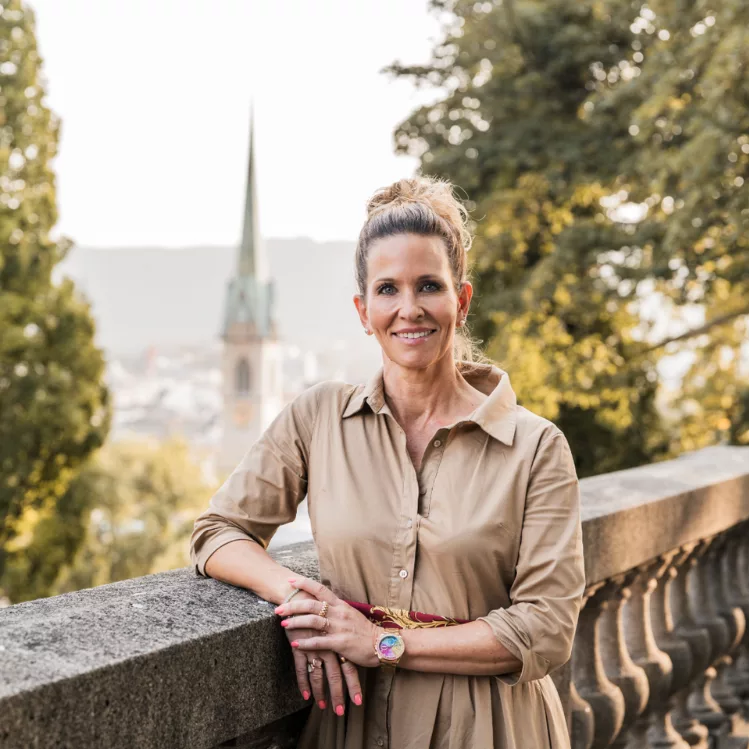
Sarah Nyffeler knows what it feels like to be dismissed by the very system she once trusted. In her early forties, her body and mind began to unravel—sleep collapsed, migraines struck, brain fog took hold—yet each doctor saw only isolated symptoms. Frustrated but undeterred, Sarah dug into the science herself, connecting the dots that medicine had overlooked. Her journey from patient to advocate became the driving force behind HerHealth, a movement dedicated to closing the women’s health gap, empowering women with knowledge, and transforming the way healthcare listens, responds, and cares.
“If I had to fight to be heard, what hope do women without resources have? That drives everything at HerHealth.”
What moment or experience first made you realize how deeply the women’s health gap runs?
The moment I realised how deep the women’s health gap runs was not in a study or at a conference. It was when my own body collapsed and nobody could give me a real answer.
In my early forties my body and brain started to unravel. I developed severe sleep problems, dizziness and even fainting episodes, chronic exhaustion, migraines, joint pain, two-week-long PMS, brain fog so intense that I struggled to function, weight gain, dry skin, loss of libido and an ADHD that suddenly became unmanageable. I went from doctor to doctor. Each of them looked at me through “their” speciality lense, ordered tests, prescribed something and sent me home.
I was told it was stress. I was told my labs were “normal”. That I was too young for perimenopause. No one connected hormones, brain, immune system and life phase. No one put the whole picture together.
What makes this even more shocking is that I am not an outsider. I have worked in the health care system for many years. I know how the system talks about quality, evidence and patient-centred care. And yet, when I was the patient, the system treated me like a collection of isolated complaints.
At some point something in me snapped. I did what I also do professionally: I went deep into the research. I read the literature, I started mapping my symptoms, I talked to leading medical experts here in Switzerland and internationally. Based on that knowledge, I began to challenge my doctors more directly and pushed them to reconsider my case and to look seriously at hormone treatment.
When my sleep improved, my energy came back and my cognitive function stabilised, it was a relief – but it did not make me grateful to “the system”. It made me angry. Because I realised that I had only received adequate help because I had the background, the language and the network to push for it.
If that is what it takes for someone like me, what does it mean for women who don’t have my resources? That question, and that anger, never left. I decided to turn it into my driver. It is the fuel behind HerHealth and behind everything I do in women’s health.
HerHealth started as a personal mission — what inspired you to turn it into a movement?
At the beginning my ambition was very simple: I wanted my life back. I wanted to sleep, think clearly, be present with my children and be able to work at the level I was used to.
The more I learned, the harder it became to see my story as “bad luck”. I realised that what happened to me is not an exception, it is a pattern. Medicine has been built around the male body for decades. Women’s biology and symptom patterns are still underrepresented in research and guidelines. And most women never receive high-quality information in a language they can actually use in everyday life.
When I started to share my own story and the science behind it on Instagram and YouTube, the response was immediate. Within three months my Instagram account grew to over 8,000 followers, purely organic. My inbox filled with messages from women who wrote things like: “Your story is my story”, “I thought I was losing my mind” or “No one has ever explained it like this”.
And they did not only write about menopause. They wrote about endometriosis, autoimmune diseases, cancer, ADHD, chronic pain, mental health. The diagnoses were different, but the pattern was the same: not being taken seriously, not being properly informed, not being offered real options.
At that point I understood that I had a choice. I could either stay in my personal story or I could build something bigger out of my anger and my experience. HerHealth is the result of that choice. It is my way of turning frustration into structure and of building a movement that works to close the women’s health gap across the whole spectrum of women’s health, not just one diagnosis.
You’ve worked in pharma and big corporations — how did that background shape the way you built HerHealth?
My career has always been at the crossroads of health, strategy and communication.
I hold a Master’s degree in Business Administration and Media Science. I spent around ten years working in the pharmaceutical industry. I then moved to executive leadership roles in corporate communications in several large corporations and at different points in my career I advised various health care players from the agency side. In my last job, I was responsible for communication and fundraising in an NGO focused on clinical cancer research. I know how complex organisations think, decide and communicate, from the C-suite down to the frontline.
All of this flows directly into HerHealth. It means that evidence is our baseline, not an afterthought. We work with recognised experts in gender and women’s health, including leading specialists in Switzerland with an international reputation. It also means that translation is a core competence. I spent years turning complex science and strategy into clear narratives for different stakeholders. At HerHealth, we use that same skill to make medical knowledge understandable and usable for women.
And finally, it shaped my view that storytelling alone is not enough. Because I understand how pharma, providers, NGOs, politics and media interact, HerHealth was never designed as “just” an Instagram account. We are building an ecosystem: online masterclasses for women, education for doctors and pharmacists, and in early summer 2026 the first Swiss Women’s Health Congress for physicians in Zurich. The goal is to influence how the system works, not only how we talk about it.
Many women still feel dismissed or misunderstood by healthcare providers. Why do you think that’s still happening today?
It happens for structural, cultural and educational reasons.
Structurally, medicine has been built on the male body as the default. Many diagnostic criteria, risk scores and treatment guidelines are still based largely on male data. Women’s symptom patterns in cardiovascular disease, neurodivergence, autoimmune conditions, chronic pain or menopause are still not fully integrated.
Culturally, girls and women are often socialised to be “reasonable”, to not exaggerate and to not take up too much space. When they insist or come back repeatedly, they risk being labelled as difficult. Over time, many start to doubt their own perception and apologise for existing in the consultation room.
Educationally, most clinicians simply have not been trained in sex- and gender-specific medicine. They may be excellent in their field, but they were never taught how perimenopause can mimic depression, how ADHD often presents in women, how autoimmune diseases cluster in female patients or how endometriosis can shape a woman’s life for decades.
Add time pressure, administrative overload and silo thinking on top of that and you get what so many women experience: rushed appointments, fragmented care and a feeling of not being heard.
This is not about women being “too sensitive”. It is about a system that is still not consistently designed around their biology and their lived reality.
Another layer is money. Female-centred research and innovation still struggle to attract the same level of funding and attention as conditions that primarily affect men. We feel this directly at HerHealth. When we speak to pharmaceutical companies, we often hear: “Finally someone is doing this.” But when it comes to sponsoring concrete women’s health projects, most of them ultimately are making excuses. The reasons are rarely spelled out, but the pattern looks very familiar. Typical female conditions such as endometriosis have historically received far less research funding and visibility than, for example, erectile dysfunction. This is not about blaming individual companies. It reflects deeper structural priorities in medicine, business and politics – priorities that still do not consistently put the health of more than half of the world’s population at the centre where it belongs. When an entire system signals, through its research agendas and funding decisions, that women’s health is somehow secondary, it becomes almost predictable that individual doctors will also underestimate women’s symptoms. It does not excuse anyone, but it helps explain why so many women are still told that it is “just stress” instead of being properly investigated.
What are some of the biggest misconceptions about women’s health that you’re trying to change?
One of the most harmful myths is the idea that women are simply small men. They are not. Hormones, immune responses, cardiovascular risk, drug metabolism and many other aspects differ significantly. When you treat women as scaled-down men, you end up with misdiagnoses, delayed diagnoses and suboptimal treatments.
Another persistent misconception is the reflex to label complex symptom pictures as “just stress”, “just age” or “just hormones”, as if that were an explanation and not a starting point. Behind these phrases you often find serious and very real conditions: endometriosis, autoimmune disease, cancer, cardiovascular issues, ADHD, perimenopause and many more.
A third area is menopause. It is still reduced to hot flushes and a temporary phase you just have to “get through”. In reality, menopause is a major neuro-endocrine transition with long-term implications for brain, bone, heart and metabolic health. If we keep treating it as a minor inconvenience, women will continue to miss out on appropriate support and, where indicated, hormone therapy.
The scale of this misunderstanding is becoming very visible right now. In November 2025, the U.S. Food and Drug Administration announced that it would remove the long-standing black box warnings from most hormone therapies for menopause after re-evaluating the missinterpreted data from the Women’s Health Initiative. Longevity physician Dr Peter Attia recently described the hesitancy to offer hormone replacement therapy to peri- and postmenopausal women as “the greatest single failure of the modern medical system.” For me, that sentence captures how profoundly women have been failed in this space for more than two decades – and why rebuilding trust will take more than a label change.
We also need to move away from the idea that normal lab ranges automatically equal good health. Lab ranges are not the same as individual optimal levels, and many were never designed specifically around female physiology. Symptoms and lived experience matter. At HerHealth we work across the full spectrum of women’s health – from puberty to postmenopause, including endometriosis, cancer, autoimmune conditions, cardiovascular risk, neurodivergence and many more – to correct these misconceptions and to give women a clearer picture of what is really going on.
How does HerHealth make complex medical research understandable and useful for everyday women?
We always start with a very concrete image in mind: a woman reading on her phone late at night after a long day, tired but still scrolling because something in her body does not feel right. If our content only works for scientists, we have failed.
This is why we invest so much in structure. At the end of December we are launching our first online, self-learning Menopause Masterclass. It takes women step by step through what is happening in their body, which treatment options exist, including hormone replacement therapy, and how to discuss them with their doctor in a meaningful way. The programme also includes regular live calls with experts, and we offer optional group and 1:1 nutrition and hormone coaching packages for women who want more support.
We complement this with free tools. Our menopause guide and appointment checklist help women prepare for medical visits. They can walk in with their main symptoms, relevant history, medication list and key questions already written down in a structured way, which changes the dynamic in the room.
On Instagram and YouTube I share my personal story in its full width: hormones, ADHD, migraines, lipedema, chronic pain, sleep, mental health, weight changes, trying to parent while unwell, navigating the system and more. I combine that with evidence-informed explanations and practical strategies women can implement immediately.
The scientific backbone behind this content is the same one we use for our education for doctors and pharmacists and for our upcoming Women’s Health Congress. Women and professionals may consume different formats, but they deserve aligned knowledge. That is what we are building.
What changes would you like to see in how doctors and health systems approach sex- and gender-responsive care?
I would like to see three fundamental shifts in how we think about care.
The first is a move from supposedly “neutral” to genuinely sex-specific data and guidelines. Sex and gender should be standard variables in research, registries and quality metrics. Female symptom patterns and risk profiles need to be written into the core of guidelines, not added on as an appendix.
The second is a shift from one-size-fits-all medicine to truly individualised medicine. Women bring a complex mix of hormones, genetics, comorbidities, life phases and social realities into the consultation room. That cannot be addressed with the same algorithm for everyone. Often this means that doctors need to work in a closer and more structured way with other professionals such as therapists, physiotherapists or nutrition experts. Not in the sense of “I send my patient there and it’s off my desk”, but in the sense of a shared treatment plan and active exchange. Many women do not need more appointments, they need better coordinated ones.
The third shift is from paternalism to partnership. Doctors who really listen to their patients and take their stories seriously provide better medicine. It sounds obvious, but in practice it would be a revolution. When women are repeatedly told that their perception is wrong or that their symptoms are exaggerated, they eventually internalise that message. Many of us learn this already as girls. If, instead, a doctor signals that the woman’s description is valid and worth exploring, asks precise questions and works with her to understand patterns, solutions can be found more quickly and with more precision.
In my ideal world, doctors and patients operate as a team. That only works if the doctor actively wants that partnership and sees the woman’s lived experience as valuable data, not as noise. HerHealth is designed to support this shift from both sides: by empowering women to show up informed and by providing education and frameworks that help professionals to deliver more sex- and gender responsive care.
For women reading this who feel unheard by the medical system, what’s one practical step they can take to advocate for themselves?
If you feel unheard, the most powerful thing you can do is to walk into your next appointment very well prepared and very clear about what you need.
Start by documenting your symptoms over time. Note what you experience, when it happens, how intense it is and what seems to trigger or relieve it. Patterns over several weeks or months are much harder to dismiss than a vague description in a ten-minute slot.
Then structure your next appointment with intention. Decide in advance what your main concern is, which two or three questions you absolutely want answered and what outcome you would consider a good use of this consultation. Our free menopause guide and checklist at HerHealth are designed precisely for that moment. Women can request this checklist from me free of charge, and it helps them to step into the room as informed partners, not as passive patients.
During the appointment, ask for explanations you can actually use. If something is unclear, say: “Could you please explain this in simple words so I can repeat it later?” That alone changes the tone of the interaction.
And then there is the decision many women avoid for too long: if a doctor does not listen to you, regularly dismisses your symptoms or ignores your concerns and preferences, this is not just “unfortunate”. It means you are with the wrong doctor. You are not difficult to expect to be taken seriously. You are responsible for choosing someone who treats your body and your life with the respect they deserve. Sometimes the most important step in self-advocacy is to close the door and walk into a different practice.
What’s been the most powerful story or moment you’ve witnessed since starting HerHealth?
One of the most powerful patterns for me is seeing how women and doctors can move closer to each other when both sides have better tools.
From women, I often receive messages like: “Because of your posts, I finally changed my doctor” or “For the first time I knew exactly how to explain what was happening to me.” They describe how they walked into a new appointment with notes, a clearer understanding of their own body and a very concrete idea of what kind of collaboration they wanted. Many tell me that this shift – showing up prepared and confident instead of apologetic – led to very different conversations and, ultimately, better treatment decisions.
At the same time, I hear from doctors and pharmacists who are relieved that someone is doing this groundwork. They tell me that when women come into the practice already understanding the basics and with a structured documentation of their symptoms, they can move much faster into discussing therapy options instead of spending half the consultation explaining basic concepts or trying to reconstruct months of history from memory. For many of them, it feels like a different quality of conversation – more focused, more collaborative and ultimately more satisfying for both sides.
These moments are powerful because they show me that HerHealth is not “against” the system, but working with the people inside it who want to do better. My anger about how women have been treated does not disappear, but it is balanced by the knowledge that change is possible when informed patients and willing professionals meet each other halfway.
When you think about the future of women’s health, what gives you the most hope?
I am still angry about how women’s health is often treated today. I do not plan to lose that anger; it keeps me sharp. But I am also genuinely hopeful, and that is why I keep building.
What gives me hope is seeing women refuse to be quiet. They share their stories publicly, they compare experiences, they challenge old narratives. The way my Instagram and YouTube communities have grown and the depth of the conversations we have there show me how ready women are to engage with serious content when you treat them as equals.
I also see a shift from taboo to mainstream. Topics such as menopause, endometriosis, autoimmune disease, ADHD in women, cancer survivorship or sexual health are moving out of the shadows into public discourse, workplaces and politics. That visibility matters.
On the professional side, I see more and more doctors and pharmacists actively seeking out training in women’s health and individualised medicine. Our continuing education offers and our Swiss Women’s Health Congress in Zurich in 2026 are direct answers to this growing demand.
And finally, I see the potential of scalable formats. With our online Menopause Masterclass launching at the end of December – including live calls with experts – a growing library of free tools and my podcast starting in early 2026 with international guests, we can bring nuanced, evidence-informed content to women and professionals far beyond Switzerland. In addition, we offer group and 1:1 nutrition and hormone coaching packages for women who need more tailored support.
My vision is clear: that a woman with complex symptoms will no longer hear “it’s all in your head” as a standard reaction, but will meet a system that is informed, curious and ready to work with her. HerHealth is my way of accelerating that future – powered by anger, yes, but just as much by strategy, structure and a deep belief in what women can achieve when they finally receive the care they deserve.
“No woman with complex symptoms should hear ‘it’s all in your head.’ She deserves a system that listens.”