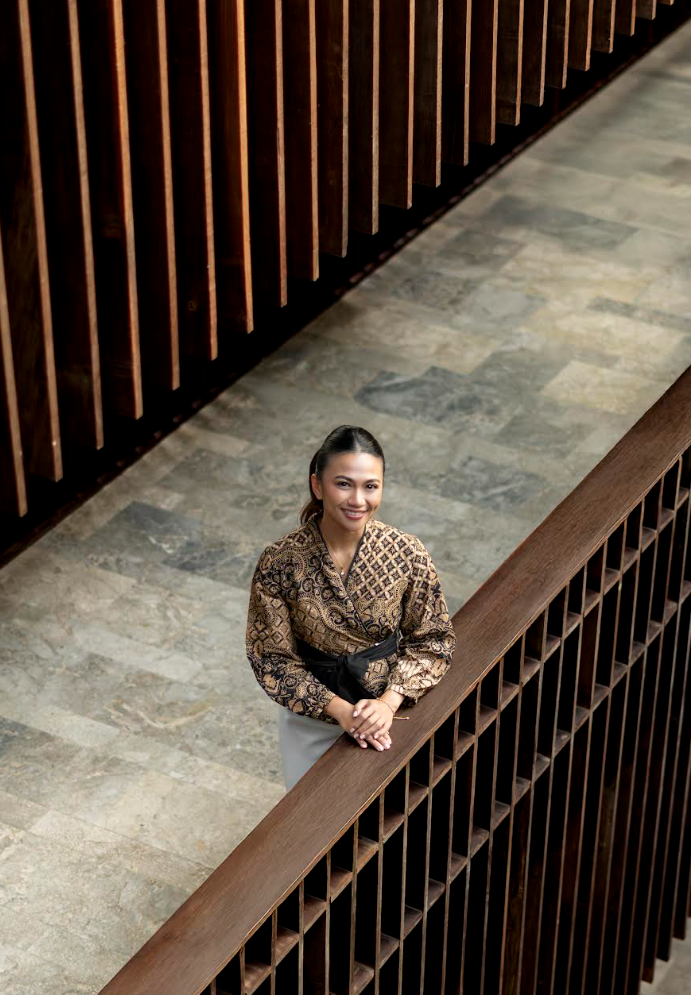



Where Tradition Meets Tomorrow: Melody Siagian on Bali’s Evolving Hospitality Scene
Bali has long been celebrated for its timeless charm, but few people see the island’s future as clearly as Melody Siagian. As a dynamic leader in the hospitality space, she blends cultural heritage with forward-thinking strategies that are reshaping how Bali welcomes the world. Through her work, tradition and innovation flow together to create experiences that feel both rooted and refreshingly new. Melody believes that true hospitality is not just about service but about creating connections that leave lasting impressions. Her vision is helping position Bali as a global destination that thrives on authenticity, wellness, sustainability, and cultural pride.
What inspired you to build a career in hospitality and marketing?
Growing up with parents who worked in a medical field, I spent much of my childhood in the hospital and self-experienced how the service industry is built around caring for and serving people. It brought me joy to see how genuine service could make others feel comfortable and happy. From a young age, I have also been drawn to creativity, such as arts, design and writing. During my studies in business management at university, I’ve developed a fascination with the world of marketing, which somehow the universe guided me to land my first job as a marketing for a small restaurant. This industry is very dynamic, because it constantly evolves with people and trends. What inspires me most is that marketing is never just about one person; it involves a collaboration that creates ripple effects from building a brand to ultimately delivering meaningful results. I appreciate how hospitality and marketing intersect, they not only convey what a brand offers, but also shape values and build emotional connections with guests even before they arrive. In this context, hospitality serves as the heart of the experience, while marketing acts as the voice that amplifies it, ensuring the brand reaches a wider audience and stays relevant in an ever-changing marketplace.
How do you keep the heritage of the hotels alive while still making them feel fresh and modern?
At The Meru Sanur & Bali Beach Hotel The Heritage Collection, we view heritage not merely as something to preserve from the past, but as a legacy that should be passed down and continually evolve. The Bali Beach Hotel holds significant historical importance as one of the first five-star hotels in Bali, envisioned by Indonesia’s first president, Sukarno. It was built as part of his vision to showcase modern Indonesia and to open Bali’s doors to the world of tourism back in the 1960s. Today, we carry that legacy forward by balancing preservation with innovation. The Indonesian government has revitalized the area into a Special Economic Zone focused on Health and Wellness, where history and international standard of service and world-class medical facilities are seamlessly intertwined. We honor the hotel’s iconic heritage by preserving its cultural essence and architectural identity while reimagining it with timeless design, wellness-driven facilities, and contemporary experiences that resonate with today’s travelers. In this way, the hotel remains a symbol of Indonesia’s cultural pride and history, while also feeling relevant, vibrant, and inspiring for a new generation of guests.
What’s the biggest lesson you’ve learned from working with both local and international brands?
Working with international brands has provided me with the advantage of experiencing established system, innovative technology, robust guidelines and certifications, as well as a well-integrated guests loyalty program. This experience has taught me the importance of building a strong brand identity, supported by a comprehensive plan, innovation and guests’ loyalty program as well as the standardize systems enable to strengthening the brand to continue to grow.
In contrast, my work with local brands highlighted the importance of creativity, agility, and authenticity. To compete globally, local brands must meet the international standards while staying true to local wisdom and cultural identity. These values resonate deeply with customers and often serve as a unique differentiator.
By blending the strengths of both experiences, the structure and scalability of international brands with the authenticity and cultural roots of local brands, it creates a strong foundation for me as a brand strategist to navigate the complexities of today’s market, who value both global standards and authenticity.
Why did you choose cultural heritage, wellness, and medical tourism as the main pillars for your branding strategy?
Set in Indonesia’s first Special Economic Zone for health and wellness, our properties stand as a symbol of modern Indonesia envisioned by the nation’s founding father, Sukarno. The revival of the iconic Bali Beach Hotel, alongside the tropical luxury resort The Meru Sanur, offers a seamless blend of heritage, holistic wellness, and contemporary sophistication all rooted in the Balinese’s way of life philosophy which is Tri Hita Karana – our respect to human, nature, and spiritual. Inspired with this local wisdom, I found the core value of our main brand pillars which are the past (historical significance of Bali Beach Hotel), to the present (The Meru Sanur as new wellness resort), and the future (bringing quality tourists for Bali through medical & wellness tourism), all while honoring the Balinese culture, celebrate Indonesian identity, and uphold international standards. Together with the Bali Beach Convention Center and world-class medical facilities, we offer an integrated destination that aims to lead the region’s tourism ecosystem through genuine Indonesian hospitality.
Sustainability seems to be a big part of your work. Why is that so important to you?
As we adopt the Tri Hita Karana, the Balinese way of life philosophy of balance between human, nature, and spiritual into our life and operations, and ensure it gets to every point of guests experience. Continuously improving our approach to sustainability focusing of three pillars : man to man (guests, associates, community), man to environment (energy efficiency, waste and water management, beach cleanup, etc), and man to spiritual (through curated holistic wellness program inspired by the ancient Balinese script ‘lontar or Usada’). These are covering the ESG framework, which is not only protecting the environment, but also support the local community, and preserving culture, all with good governance.
What do you think helped the hotels earn recognition as some of the best in the world?
I believe it is all because the people, the employees who live and breathe the brand values of Tri Hita Karana and the genuine Indonesia hospitality in everything we do here. From the guest arrive until they depart, we ensure this philosophy is not only felt through the design, products, but also through our services.
How has your creative side — like your passion for music — helped you in your career?
I’ve learned that maintaining a good balance of body, mind, and soul will help you to have alignment of growing inward and outward. In spite of the workload, busy schedule, being active and still doing my passion in music, arts, and sports helped me to relax my nerve and can think more clearly at work. By doing so, most of the time I found new ideas that I can put into my work, it seems that when your soul is fed and living a healthy lifestyle, then you can build the strong mentality to stay motivated and passionate at work.
You’ve done a lot of community and mentorship work. What motivates you to give back?
I was raised in a small family in a small town, traditional and conventional, where most of my friends back in college got married after graduate, have kids, and most of them becoming housewives. They would think that I am too old in the market because I chose to focus on building my career. I’d love to share my experience to others, to return what I have been blessed, so other can have the same success or even more success, and not be afraid to do what they’re passionate about.
What excites you most about the future of these hotels and the new projects you’re working on?
I am thrilled to be part of a legacy that elevates Indonesia’s tourism, particularly in Bali, combining world-class medical facilities with holistic wellness, and our diverse cultural heritage and traditions. Through this state-owned resort and hotel, I have the opportunity to represent Indonesia as a nation that is not only rich in tradition but also progressive, dynamic, and competitive on the global stage. For me, it is about ensuring that Indonesia’s name continues to shine brightly in the eyes of the world.
Where do you see Bali’s hospitality industry heading in the next few years?
With the establishment of ‘The Sanur’ Special Economic Zone for Health and Wellness, and as lifestyle trends increasingly shift towards wellness and longevity, I believe Bali’s future goes beyond its natural beauty. Bali is set to become a premier destination for health and wellness, offering world-class facilities while staying rooted in local traditions. This allows us to compete with established wellness destinations such as Dubai, Korea, Malaysia, and Thailand, all while maintaining Bali’s unique identity and authenticity.