

Ellen Duffy-Lueb: From Burnout to Breakthrough
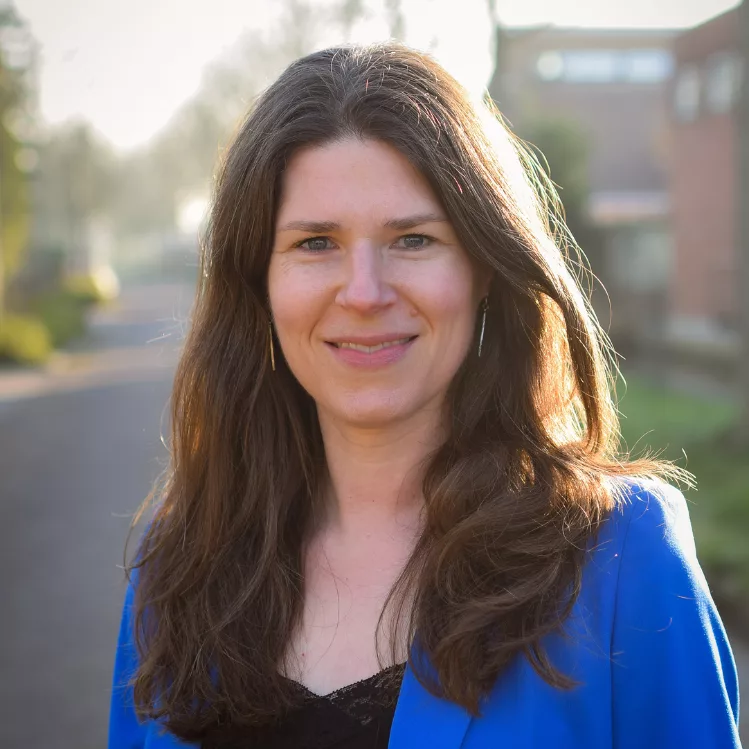
Ellen Duffy-Lueb knows the crushing weight of burnout all too well. At just 31, she found herself depleted, exhausted, and questioning how she had lost control of her own life. That moment became her wake-up call — the start of a deep personal transformation that would not only restore her balance, but also inspire her mission to help others do the same. Today, as a Holistic Burnout Prevention Coach and founder of Reclaim Your Control, Ellen empowers women to break free from the cycle of overwhelm using her signature 5-step FOCUS framework. Through her transformative 7-week program, Never (Again) in Burnout, she guides her clients toward a sustainable balance of body, mind, and soul — proving that burnout doesn’t have to be the end of the story, but the beginning of a new one.
Let’s start with your story — what was that moment at 31 like, when you realized burnout had taken over your life?
To be honest, it felt like my world came crushing down. I had worked so hard to build up a career in international marketing research, having worked in San Diego, CA (USA) and Geneva (CH) before moving back to the Netherlands. I loved the travel involved and the high-paced work. But I also realized I had overdone it.
After the initial shock, I realized I needed to check in with myself and see if this line of work still suited me – if I wasn’t missing something. On the surface level, I enjoyed being good at what I did and working hard with my colleagues. But on a deeper level, a level I had ignored for a long time, I started to notice that I longed for more meaning, a purpose in what I do (beyond making money). Once I realized that I did not want to go back to my old job, I decided to take a break – also because I was getting married a few months later and wanted to make sure I would be back feeling happy and energized (enough) by that time 😊.
What were some of the first steps you took to begin reclaiming your energy and control?
After those first few dreadful weeks, when even walking the few steps from couch to kitchen felt like too much, I signed up for an online mindfulness course. The first few times I had to close my eyes and check in with my body, I felt nauseous. I had ignored listening to my body for so long that I felt overwhelmed by the sensations when I did. But as I started doing this more often, I realized this was what I had missed out on for so long. I started rebuilding the connection with my own body, appreciating it for what it did instead of cursing it for failing me (that’s how I felt when I ended up at home, feeling sick and depleted, that my body had failed me).
I also started going for short walks outside, finding parks, looking at nature. It helped me to reconnect with myself as part of nature.
Because I wanted more tools before going back to any type of work, I also enrolled in a training program to become a certified Stress Counselor – not necessarily to help others (yet) but to help myself figure out how to keep myself afloat.
Burnout can be sneaky — what are some signs people often miss before it hits hard?
This is very true, especially because early burnout signs are so normalized in our fast-paced society. However, some signs to look out for are: physical ailments (getting sick more often, little accidents, back pains) – our bodies know well before our minds do that something is wrong. But also, are you still looking after yourself? Do you buy healthy foods to nourish yourself? Do you allow yourself the time to have a proper meal, to step outside, to be creative, to fulfil your needs beyond the very basics of getting fed, dressed, and off to work? We often get so caught up in the treadmill of daily life and its many demands that we forget to check in with ourselves and our own needs.
What inspired you to turn your personal experience into a coaching practice?
After leaving my job in international marketing research, I became a teacher and coach at a university of applied sciences. I started working more with people one-on-one, listening to their struggles and trying to provide guidance as needed.
During these years, I became a mother of two and deepened my personal development by learning about high-sensitivity (also in my two boys), time and energy management, and reconnected with my spirituality. I was desperately looking for ways to help myself feel balanced and secure in the rollercoaster of my life. I became a certified mindfulness trainer and holistic life coach, and with each training program I went through, I gathered more pieces of the puzzle for myself.
Until one day, approaching age 40, I realized: I’m feeling grounded and confident in knowing that I will be ok, regardless of what life throws at me. And I realized that it came down to a few steps, a few realizations if you will.
Seeing the struggles of both my students and my colleagues, I realized how widespread the need for guidance in managing our fast-paced lifestyles is – how so many people, and especially women, struggle with the multiplicity of choices and demands that are being placed upon us. And I decided I wanted to be there for all these beautiful people – especially women – to help guide them in a way I wish someone had guided me all those years ago, when I needed it the most.
Tell us about your 5-step FOCUS framework — what makes it so effective?
What makes it so effective is that it is clear and simple. It addresses the 5 main steps to help you take back the control of your own time and energy, to put you back in the driver’s seat of your own life.
In step 1, we explore what is eating up most of your energy right now. And in all cases, that turns out to be the mental load you decide to take on (mostly unconsciously). We are bombarded with information every single day. And with most of this information, there is nothing we can do. It’s not in our control. But because we spend so much time and energy on it, we don’t have enough time and energy left to spend on what we can control – ourselves. So it’s a case of moving from outside in, back to inside out.
Then in step 2, we look at what brings you energy, on all levels (body, mind and soul). Once we know this, we can add more of it.
Step 3 lets us look at our goals, tasks and priorities, within the context of the many roles we all carry. We do not only carry a role in our paid employment, but also in our household, as parent, partner, household manager, as relative, friend, neighbour, community member, and as your person. And ALL of these roles require time and energy. For ALL of these roles, you may have certain goals, wants, and needs. That requires clarity so we can then provide a clear focus for your time and energy moving forward.
In step 4, we look at how we can use our precious time and energy in the most effective and efficient way. It provides tools to help make the most of the limited time and energy we have available to us each day.
And finally, in step 5, we explore how you can support yourself in this journey moving forward. We look into the external, internal, and spiritual support available to you, and how to make sure you will continue to feel supported in looking after yourself, no matter what life throws at you.
Why do you think so many women, in particular, struggle with burnout today?
I think that as women, generally speaking, we carry a higher load of tasks and responsibilities than men do. Yes, men have picked up more responsibilities at home as women have been part of the workforce, but the managerial part, the overseeing part, is still very much a female responsibility. Women are still seen as the main caregivers.
We now carry the responsibility of the household AND our paid jobs. We tend to be stretched in more directions, being more available to others, and looking after our own needs last. We have been sold the idea that ‘we can have it all’. And yes, the beauty of our time is that indeed, we have so many options to choose from. But as Michelle Obama said so wisely in her memoir: we can have it all – just not all at the same time.
We each carry a certain amount of time and energy into our days, and that’s it – that’s what we have to work with. Time and energy are our main currencies. Better spend them wisely.
Your program “Never (Again) in Burnout” sounds powerful — what kind of transformations do your clients typically experience?
The main benefit my clients experience is that they feel back in control of their own lives. Instead of letting everyone else and circumstances decide how they spend their daily time and energy, they are back in control of deciding how to spend their time and energy. In the words of some of my clients:
“My biggest win has been learning to truly value and prioritize myself. I’ve discovered practical tools and methods that now help me structure my day, manage my energy, and set clear boundaries.”
“I now choose whether I hold my boundary, actively decide if I am going to spend my time on something and consider if things belong to me or someone else. I let it bother me less, can give accountability back where it belongs and have more time for myself and the things important to me.”
“During the sessions, I gained clarity about where my energy was going and how that was affecting my days and emotions. I received practical tools that helped me make small changes in my daily routines, allowing me to stay closer to myself and my feelings.”
What’s one belief or mindset shift that has been key in your healing journey?
The belief – the knowing – that I’m already enough, already whole, without seeking anyone’s approval. I am not here to prove my worth to anyone. I am here to be who I feel right to be. That’s it.
It can be tricky to stick to this as we are all judged all the time – you did this right, and this wrong. Feedback is generally focused on what you could do better. And that’s ok. The main thing to learn here is that what you do is not who you are. We all make mistakes from time to time. That doesn’t make us bad as a person.
AND, in every interaction, there are (at least) two people involved: you and the other. Become very aware of what belongs with you, and what belongs with the other. Don’t carry other people’s burdens or insecurities for them. Stay close to yourself. It will save you a ton of energy.
How do you personally maintain balance now, especially while helping others find theirs?
I make sure to check in with myself multiple times per day. I start my day by briefly connecting with myself and my spiritual guide to set an intention for the day. I have created a morning routine in which I care for my body in terms of nutrition and movement to start the day right. And I take breaks, more regularly than I thought I needed. The thing is, once you feel like you need a break, you’re technically already too late 😉. So I take short breaks frequently, and a longer break around lunch time, to have a proper meal and go for my daily walk.
Before I go to bed, I clear the day’s energy and do a 20-minute meditation, in which I show gratitude for my day, and set myself up (energetically) for the next day. Since I do this, I sleep beautifully and wake up rested and energized.
I know all too well now: I can only look after others if I look after myself first.
If someone feels like they’re on the edge of burnout today, what’s the very first thing you’d encourage them to do?
Take a step back. Call in sick. Do what is needed for YOU – start looking after yourself again. You don’t owe anybody anything, even your employer. And keep this in mind: you can only be there for others if YOU are ok. If you’re not ok, then others will need to be there for you.
And another thing to realize: you are replaceable in the tasks you do. It may sound harsh, but it’s the truth. If something happens to you tomorrow and you are not able to do your job, you WILL be replaced. Sooner than you might think.
Same at home: the tasks you do can be taken over by others (so let them take on some as well). But where you can NEVER be replaced is in being you. You, as the beautiful person that you are – your body, your mind, your soul. So look after it like your life depends on it. Because in many ways, it does.