


Financial Wisdom for Women of a Certain Age(ncy): Time Horizons
By Sherry Finkel Murphy
If I had a dollar for every time a woman tells me she’s “not good with money …” I teach women about money so they can make the best financial decisions with knowledge and confidence. If you want to change your money mindset, that’s the work of a therapist or coach. Doing unhealthy or unproductive things with money (and food while we’re at it) is a different challenge. My job is to address the stress we place on ourselves when we don’t understand how to act intentionally with our money, whether we have a little or a lot. We need knowledge of money mechanics and financial planning best practices.
Madrina Molly: Financial Wisdom for Women of a Certain Age(ncy)
I founded Madrina Molly to give women the education they deserve but aren’t receiving from the financial industry. Over the next few months, I’ll be writing about some concepts that will open your eyes and make it much easier to determine how to manage and grow your wealth.
Time Horizon
The expression time horizon (sometimes called duration, but that’s awfully technical) refers to the length of time you will hold your money before you put it to use. For example, the time horizon for money used to pay monthly expenses is under 30 days. By contrast, the time horizon for your later retirement is more than 30 years. And the time horizon for something like renovating your kitchen might be two years.
The above examples should make it clear that your money is not all one thing. We tend to reduce our money to the portfolio or to net worth, when, in fact, it’s a series of buckets sorted by purpose and time horizon.
Understanding the time horizon of each money bucket helps you choose the perfect location in which to save it and the perfect instrument to use for growing it. You don’t need to become a financial guru to get it right. But you may need to use your search engine to understand what instruments are appropriate for certain time horizons and goals.
Time horizon isn’t the only factor in determining the right instrument to grow your wealth. But it’s one of the biggest ones. And choosing an instrument by time horizon isn’t the same for all people. A 25-year-old saving for a car in four years and a 60-year-old who wants to set aside four years of medical expenses will likely use different financial instruments. That’s because the purpose of the money differs, as does their age.
Best Practice
Short-term money: Money you intend to use within two years—whether it’s income from a paycheck, income from business, interest, dividends, or savings—should not be in the stock market. This is because volatility matters more in the short term than in the long term. Because the market fluctuates daily, you do not want to risk needing to retrieve your money when the market is down. You also don’t want to risk your growth being treated as income versus capital gains. As a result, this money belongs in checking, savings, or near-cash instruments.
Medium-term money: Money you plan to use between 2 and 10 years is perfect for the stock market, where it will achieve the best growth. These may include:
· income-producing investments, so dividends can refill your short-term money bucket;
· stable, large corporations that are unlikely to be volatile; or
· corporate or municipal bonds for income.
Long-term money: Money you will use in more than 10 years can benefit from a tax-preferred retirement account and being invested in the stock market so that taxes can be deferred. Or it can be placed in an illiquid instrument like private equity (venture capital) or whole-life insurance. Or it can be placed in property, like home equity or undeveloped land. Because the time horizon is long, you are able to take more risk with this money because you’ll have more time to recover. You also will want to see more reward from this money over time (whether growth or guarantees) to keep up with inflation.
Summary
Often, I see the “ends” of the spectrum:
· women keeping too much cash in checking or in accounts that will not grow to produce wealth and keep up with inflation; or
· women who render illiquid money they will need sooner, causing cash crunches, tax penalties and unnecessary pain.
Now that you understand time horizon, you will be able to stop and think of where your money belongs and choose the right instrument.
Meet your Expert
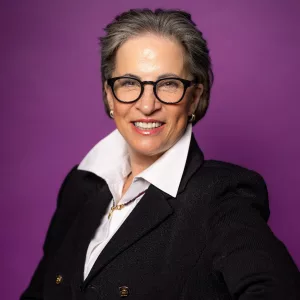
Sherry Finkel Murphy, CFP®, RICP®, ChFC® is the Founder of Madrina Molly, membership-based guidance and education for women who are actively designing their second 50 years. Sherry highlights the reality of the “Triple-Decker Club Sandwich Generation,” where women balance caring for aging parents, supporting adult children, and planning for their own financial futures.
Madrina Molly provides members with bi-weekly Zoom meetings, on-demand answers to financial questions, and education in critical financial and longevity planning topics for an annual fee of $379. She is a CFP® on-demand providing guidance for a cohort of which she, herself, is a member.