


Moyo Ogunmiloro: Reinventing Pasta, One Plantain at a Time
When her baby refused every store-bought option, Moyo Ogunmiloro turned frustration into innovation, experimenting in her kitchen until she discovered a recipe that worked: plantain pasta. What began as a mother’s solution to a fussy eater has grown into Meliza’s — the UK’s first plantain pasta brand — blending African heritage with global food innovation. Guided by faith, fueled by family, and committed to impact over applause, Moyo is proving that sometimes the simplest ideas can spark the biggest revolutions at the table.
What inspired you to turn a personal challenge—feeding your baby—into a business like Meliza’s?
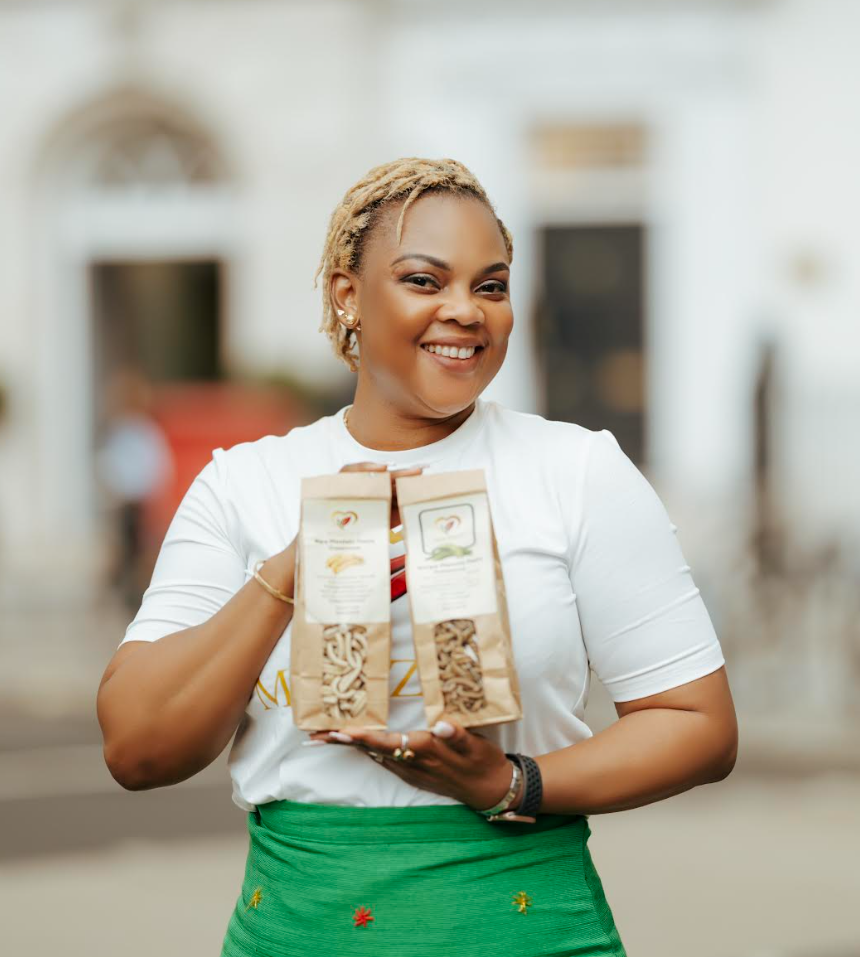
It began in 2016 when my baby boy rejected every store-bought baby food. He was a fussy eater, but plantains became his safe food; boiled, grilled, in any form. One night, I experimented and made plantain pasta, and he loved it. It became a staple in our home. Years later, my husband, my number one cheerleader, challenged me to make it our first shelf product. When an Italian client tried it and called it the “glory of pasta innovation” and a potential partner wanted equity just from the idea, I knew this was bigger than us. That was my aha moment.
How did your background in digital technology and product management shape the way you approached building your brand?
My consulting career taught me customer obsession, design thinking, agile delivery, and scaling solutions. I’ve learned to simplify complex ideas into clear stories that resonate, while also building the systems behind them. At Meliza’s, I am both the storyteller of culture and the builder of sustainable systems.
Starting a business while raising a family is no small feat. How did you manage both worlds?
Honestly, I just get on with it. My husband and I are best friends and true partners—we share calendars, accounts, and even a family WhatsApp group. Raising kids in the UK without extended family has taught us to rely on God and on each other. Every year, we set our goals as a family and review quarterly, even involving our teenage children. Still, the juggle is real, sometimes I overdo it, break down, and end up in hospital. I’ve learned the hard way that even warriors need rest, true REST.
What were some of the biggest obstacles you faced launching the UK’s first plantain pasta brand, and how did you overcome them?
My greatest challenge has been finding the right people. People are the key to everything- success or failure.
Ideas are powerful, but without the right team, they won’t fly. When all other manufacturers dismissed me as “crazy” but one still chose to partner with me, and when a woman I looked up to showed she believed in my vision, those moments reminded me I wasn’t alone, that this mission has divine backing.
You’ve built Meliza’s without loans or external funding. What drove you to take that bootstrap approach?
Meliza’s is a God-given mission, and I refuse to compromise the values at its core. The right funding partners will come, but only if they align with our vision and mission. Yes, I feel like running away sometimes, it’s scary. But I fear disappointing the One who entrusted me with this more than I fear the struggle. So, I keep going.

How does your faith and values influence the decisions you make as an entrepreneur?
Scriptures anchor me: “Nevertheless, not my will but Yours be done” (Luke 22:42), “The Lord is my Shepherd, I shall not want” (Psalm 23:1). These words shape how I work, with fairness, kindness, and integrity.
My quotes are: “Do unto others what you want done to you”– I believe in doing what is right and fairness always, with kindness. “There are multiple entrances to a market” (figuratively, yet true)
I don’t “bring God into the boardroom”, He brings me in. My role is to honour Him by the way I lead, respect people, and allow them to shine.
Mentoring women around the world is a big part of your mission. What’s the most important lesson you share with them?
I always remind women: there is more in you than you see. You are here for a reason, and within you is either a solution or the seed of one. One of my mentees, a mother of two, was unfulfilled in her career. Through mentoring, she found her calling in working with children, built a private tutoring program, wrote two books, and now runs her own business full-time. That’s the power of unlocking what’s already inside.
What does it mean to you to “build for impact” rather than “build for applause”?
Applause is fleeting, it feeds the ego. Impact is lasting, it feeds generations. Building for impact means making decisions that may not bring instant recognition but create real change. At Meliza’s, that means no shortcuts, choosing sustainability even when it costs more, and partnering with social impact organizations so our growth uplifts others.
How do you see African ingredients and culture influencing global food trends in the next 5–10 years?
Beyond plantain, ingredients like fonio (a nutrient-rich ancient grain from West Africa), baobab (a superfruit packed with vitamin C), and teff (a high-protein, gluten-free grain from Ethiopia) are gaining global attention. But it’s not just the food, it’s the story, the origin. When people understand the cultural heritage, the farming traditions, and the community impact behind these ingredients, they are buying into a legacy which is more than just buying food. That’s how Africa will shape the global table in the coming years.
There’s a lot that us food producers, innovators and just about anyone working in the food space can and should do, contribute to help us get and stay there sustainably. At Meliza’s, we are contributing our fair share into the changes we want to see in our food space in the coming years through our values and impacts through self-work and partnerships.
What advice would you give to aspiring entrepreneurs who are juggling family, values, and ambitious dreams?
Don’t stop. Better days are coming. Pace yourself, build with people who share your values, and stay anchored in your mission. Stay close to your customers, listen, learn, and improve and iterate. Don’t forget to enjoy the journey. Document it all, because one day your story will be someone else’s survival guide. I can’t wait to have the documentary of Meliza played to future generations when I’m long gone.
For me, it’s tough love and encouragement altogether, because you’ll need both.